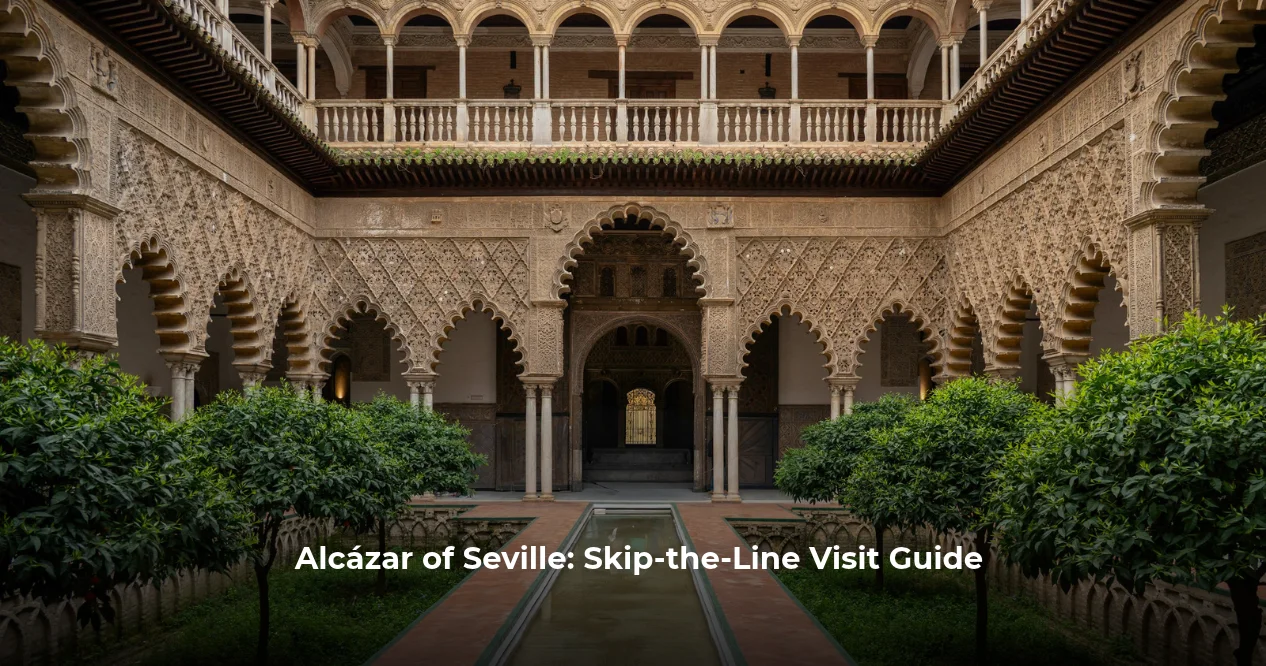
The Royal Alcázar of Seville, often called the Alcázar of Seville, is one of Spain's most extraordinary historic palace complexes. Standing beside Seville Cathedral and the Archivo de Indias in the heart of Andalusia's capital, it combines Islamic, Mudéjar, Gothic, Renaissance and Baroque influences across working royal residences, ceremonial halls, courtyards and extensive gardens.
This is not simply a palace to admire from one grand viewpoint. The Alcázar unfolds room by room, revealing carved plasterwork, tiled walls, reflective pools, shaded arcades and planted paths. It remains a royal site, while its exceptional cultural importance is also recognised through its inclusion within Seville's UNESCO World Heritage listing.
What Makes the Alcázar of Seville Special
The palace developed over centuries on the site of earlier fortifications, and that layered history is central to its appeal. Visitors move between spaces shaped by different dynasties and artistic traditions, with the fourteenth-century Mudéjar palace commissioned by Pedro I among the essential highlights.
The Mudéjar Palace and Courtyards
The Patio de las Doncellas is among the most recognisable scenes in the complex, framed by delicate arches, intricate ornament and a long central water feature. Nearby rooms such as the Salón de Embajadores display richly detailed ceilings and decorative schemes that reward unhurried observation.
The Gardens
Beyond the palace rooms, the gardens offer an entirely different rhythm. Water channels, orange trees, tiled fountains, hedges and pavilions create a welcome change of pace after the busiest interiors. Give yourself time to wander rather than treating the gardens as a quick exit route.
What to Expect During Your Visit
A visit begins with security and ticket checks before entering a sequence of historic spaces that can become busy at peak periods. The route is largely self-guided unless you book a tour, and the appeal lies in looking closely at craftsmanship as much as seeing famous rooms.
Expect changing light, narrow passages and a mixture of covered interiors and open courtyards. The scale can be deceptive: although the palace is centrally located, its gardens are substantial. Comfortable footwear makes a noticeable difference, especially if you plan to explore the full grounds.
How to Plan Your Visit
Timed admission is the most important part of planning an Alcázar visit. Select an entry time that leaves room for security procedures and the walk through Seville's historic centre. If you book a skip-the-line product, read its inclusions carefully, as priority arrangements may relate to ticket collection or entry processing rather than removing every possible wait at security.
Ticket prices, opening hours, seasonal schedules and access conditions can change. The official Royal Alcázar website is the best source for current opening times, official ticket categories and any temporary route restrictions. Check the official website for the latest updates before finalising your plans.
The TripXOXO listing for an Alcázar of Seville skip-the-line access ticket can be useful for travellers comparing their booking options. Confirm the chosen date, timed entry details, identification requirements and cancellation terms before purchase, particularly during holidays and high-demand periods.
Recommended Visit Duration
For most first-time visitors, two to three hours is a realistic allowance for the principal palace rooms and gardens. A shorter visit can cover the headline courtyards, but it leaves little time for the gardens or slower photography. Architecture enthusiasts, gardeners and visitors who enjoy studying decorative details may prefer three hours or more.
Best Photo Spots at the Alcázar of Seville
The Patio de las Doncellas is a classic choice, especially when its water feature reflects the surrounding arches. The ornate façades around the Mudéjar palace offer close-up detail, while the Salón de Embajadores is memorable for its dramatic dome and decorative richness. In the gardens, seek out symmetrical paths, fountains and shaded viewpoints rather than stopping only at the first major water feature.
Photography rules may vary by room, and flash, tripods or professional equipment can be restricted. Be considerate in narrow spaces, avoid blocking routes and check current photography guidance on arrival. Early timed entry can provide calmer conditions for pictures.
Transport and Arrival Advice
The Alcázar sits in Seville's walkable historic centre, a short walk from the cathedral, Giralda and Archivo de Indias. Taxis can drop visitors near the central monuments area, while local public transport connections serve nearby streets and plazas. Allow extra time because pedestrian streets, crowding and one-way routes can make the final approach slower than expected.
Arrive with your booking confirmation ready and follow staff directions for the appropriate entrance or queue. Do not rely on a last-minute arrival, even with a timed ticket. Security screening and high visitor numbers can affect the pace of entry.
Accessibility and Family Planning
The Alcázar is a historic complex, so surfaces and routes are not uniform. Some areas include steps, thresholds, cobbles or uneven garden paths, and access arrangements may differ between rooms. Visitors using wheelchairs, pushing strollers or requiring a step-free route should contact the official venue before travelling for the most current practical guidance.
Families can enjoy the visual variety of the site, particularly the tiled rooms, fountains and gardens. Plan a manageable pace, bring water in warm weather and agree on a meeting point for older children in case the group becomes separated. A morning entry often works well for families before heat and crowds increase.
Common Mistakes to Avoid
The most frequent mistake is underestimating how much there is to see. Visitors who schedule the Alcázar immediately before another fixed reservation may find themselves rushing through the gardens. Another common error is assuming that every ticket includes the same areas, so always review the product description and official conditions.
It is also wise not to treat a skip-the-line booking as permission to arrive late. Timed admissions commonly depend on the reserved slot, and late arrival may complicate entry. Finally, avoid visiting at the hottest part of a summer day without water, sun protection and a realistic plan for rest.
Visitor Tips
- Book a timed entry before travelling when demand is high.
- Check official opening hours shortly before your visit.
- Arrive early enough for security and entry procedures.
- Wear supportive shoes for stone floors and garden paths.
- Carry water, particularly from late spring through early autumn.
- Keep your booking confirmation and identification accessible.
- Allow extra time for the gardens after the palace interiors.
- Respect barriers and follow staff instructions in fragile historic rooms.
- Check photography rules before using flash or larger equipment.
- Build flexibility into your day rather than booking another attraction immediately afterward.
Nearby Things to Do
- Visit Seville Cathedral and climb the Giralda for city views.
- Explore the Archivo de Indias, part of Seville's UNESCO ensemble.
- Walk through the Santa Cruz quarter's narrow lanes and small plazas.
- Stroll to Plaza de España through María Luisa Park.
- Watch sunset from the riverside around Torre del Oro.
Travellers planning several major Seville experiences can compare combined scheduling through the tripXOXO CITY Pass. Grouping nearby sights around the Alcázar may make better use of a limited stay, particularly when timed entries and transport needs are considered together.
Conclusion
The Royal Alcázar of Seville deserves more than a quick stop between the cathedral and the city centre. Its palace rooms reveal remarkable artistic layers, while its gardens offer space to slow down. Reserve a suitable timed entry, leave enough time for the full complex and check the official website for the latest updates before your visit.
Location: Plaza del Triunfo, Seville, Andalusia, Spain, beside Seville Cathedral and the Archivo de Indias.
Recommended duration: Allow around two to three hours for the palaces and gardens, with longer if you enjoy photography or a slower garden walk.
Best time to visit: Early morning or later afternoon generally offers a more comfortable atmosphere, particularly during Seville's warmer months.
Getting there: The palace is in Seville's historic centre and is reachable on foot from the cathedral area, by local bus, taxi or tram connections near Plaza Nueva.
Accessibility: Historic surfaces, steps and garden paths can be uneven. Visitors needing step-free route details should confirm current accessibility information directly with the Royal Alcázar.
Family friendliness: The gardens, decorative rooms and open courtyards can be engaging for families, although supervision is important around fountains, steps and busy spaces.
Frequently Asked Questions:
Q) How can I combine the Alcázar of Seville with other major sights?
A) The Alcázar fits naturally into a historic-centre day with Seville Cathedral, the Giralda and the Archivo de Indias. The tripXOXO CITY Pass can help travellers compare multi-attraction planning in one place. Leave enough time between reservations because the palace gardens are worth exploring slowly.
Q) Is the Alcázar crowded throughout the year?
A) Crowd levels usually rise during school holidays, weekends and peak travel seasons. Timed tickets help manage entry, but popular rooms can still feel busy. Morning or later-day slots may offer a more relaxed rhythm, depending on the season.
Q) Can an attraction pass help save money when visiting Seville attractions?
A) A pass can be worthwhile when its included experiences match the places you genuinely plan to visit. The tripXOXO CITY Pass provides a route for travellers to assess bundled sightseeing options. Compare the total cost, included admissions and reservation requirements before making a decision.
Q) How should I plan multiple experiences around an Alcázar visit?
A) Choose the Alcázar time first, then add nearby activities with a comfortable gap before and after it. The tripXOXO CITY Pass can support travellers who want to organise several Seville experiences together. Avoid placing a tightly timed meal, tour or transport departure immediately after the gardens.
Q) Do I need to reserve Alcázar of Seville tickets in advance?
A) Advance booking is sensible, especially during weekends, holidays and popular travel seasons. Timed entry systems can limit spontaneous access when demand is high. Check the official Royal Alcázar website for current availability and visitor conditions before committing to a date.
Q) What does skip-the-line access mean at the Alcázar of Seville?
A) Skip-the-line wording can describe a booking arrangement that reduces a ticket-purchase queue. It does not always remove security screening or every waiting period at the entrance. Read the product description carefully so you understand its exact entry process and inclusions.
Q) What is the best time of day to visit the Alcázar?
A) Morning entries often feel more manageable, particularly during warmer months in Seville. Later afternoon can also provide softer light in the gardens. Seasonal hours vary, so check the official website for the latest updates before choosing your time.
Q) Are the Alcázar gardens included with general admission?
A) The gardens are a fundamental part of the Royal Alcázar experience and are normally visited alongside the palace complex. Ticket categories and special access arrangements can change over time. Review the official ticket information to confirm the precise access included with your reservation.
Q) Can I take photographs inside the Alcázar of Seville?
A) Photography is one of the pleasures of visiting the palace, but rules can differ between spaces. Flash, tripods and professional equipment may face restrictions. Follow onsite signs and staff guidance, while avoiding delays for other visitors in narrow rooms.
Q) Which areas are best for photographs at the Alcázar?
A) The Patio de las Doncellas is especially photogenic because of its arches, water feature and balanced proportions. The decorative details of the Mudéjar palace reward close-up shots. Garden fountains and symmetrical walkways offer quieter compositions later in the visit.
Q) Is the Royal Alcázar suitable for children?
A) Children often respond well to the palace's fountains, colourful tilework and garden spaces. The visit works best with breaks and a pace suited to the family. Adults should remain attentive around steps, water features and crowded interior routes.
Q) Should I buy Alcázar tickets from the official website?
A) The official website is the best starting point for current opening hours, ticket categories and venue policies. Authorised sellers may offer alternative booking formats or bundled arrangements. Compare the conditions carefully and ensure the reservation clearly states your date and entry time.
Q) What should I wear for a visit to the Alcázar?
A) Comfortable walking shoes are more important than formal clothing at the Alcázar. Stone surfaces, courtyards and garden paths can become tiring over a long visit. In hot weather, light layers, sun protection and water make the outdoor sections more comfortable.
Q) Can I bring a bag into the Alcázar of Seville?
A) Security procedures apply at major heritage sites, and bag rules may change according to operational needs. Travelling light generally makes entry and movement through the palace easier. Check official visitor guidance before arrival for current restrictions on luggage and larger items.
Q) Are there toilets at the Royal Alcázar of Seville?
A) Visitor facilities are available within the broader site, but their locations may not always be immediately obvious. It is practical to use facilities before beginning a long garden circuit. Ask staff for directions if you need accessible or family-oriented facilities.
Q) Is food allowed inside the Alcázar?
A) Historic interiors and gardens require careful protection, so food rules should be respected closely. It is best to plan meals before or after your visit rather than relying on eating during the route. Check current onsite guidance for policies concerning drinks and snacks.
Q) Can I visit the Alcázar during summer?
A) Summer visits are possible, but Seville can experience intense heat. An early entry gives more comfortable conditions for palace rooms and gardens. Bring water, wear sun protection and avoid building an overly demanding outdoor itinerary around midday.
Q) What should I do after visiting the Alcázar?
A) The immediate area is ideal for a gentle continuation through the cathedral district and Santa Cruz quarter. A walk toward María Luisa Park and Plaza de España offers a broader view of Seville's monumental landscape. Leave time for a drink or meal after the palace rather than rushing onward.
Q) Is a guided tour necessary at the Royal Alcázar?
A) A guided tour can add historical context to the dynasties, architecture and decorative symbolism. Independent visitors can still enjoy the site deeply with time to observe and read available information. Choose a guided format if interpretation is more valuable to you than complete flexibility.
Q) Can I visit the Alcázar and Seville Cathedral on the same day?
A) These landmarks are close together, making a same-day plan practical. Both deserve time, so avoid treating either one as a brief stop. Reserve timed entries with a comfortable interval and account for queues, security procedures and a meal break.
Q) What nearby attractions are closest to the Alcázar?
A) Seville Cathedral, the Giralda and the Archivo de Indias stand immediately beside the Alcázar. The Santa Cruz quarter begins nearby, offering atmospheric lanes and plazas. Plaza de España and María Luisa Park are also reachable on foot with additional walking time.
Q) Are there places to rest in the Alcázar gardens?
A) The gardens provide a calmer atmosphere than many of the palace interiors. Benches and shaded areas may be available, although their exact availability can vary. Plan brief pauses rather than rushing from one landmarked corner to another.
Q) What are the main highlights inside the Royal Alcázar?
A) The Patio de las Doncellas, Salón de Embajadores and richly decorated Mudéjar rooms are key highlights. Visitors should also make time for the courtyards and gardens. The experience is strongest when you notice small details such as tilework, carved plaster and ceilings.
Q) Can I visit the Alcázar if it rains?
A) Rain does not remove the appeal of the palace because many important rooms are indoors. Garden paths may be wetter and less comfortable, however. Bring suitable footwear and allow extra care on smooth or uneven surfaces during damp conditions.