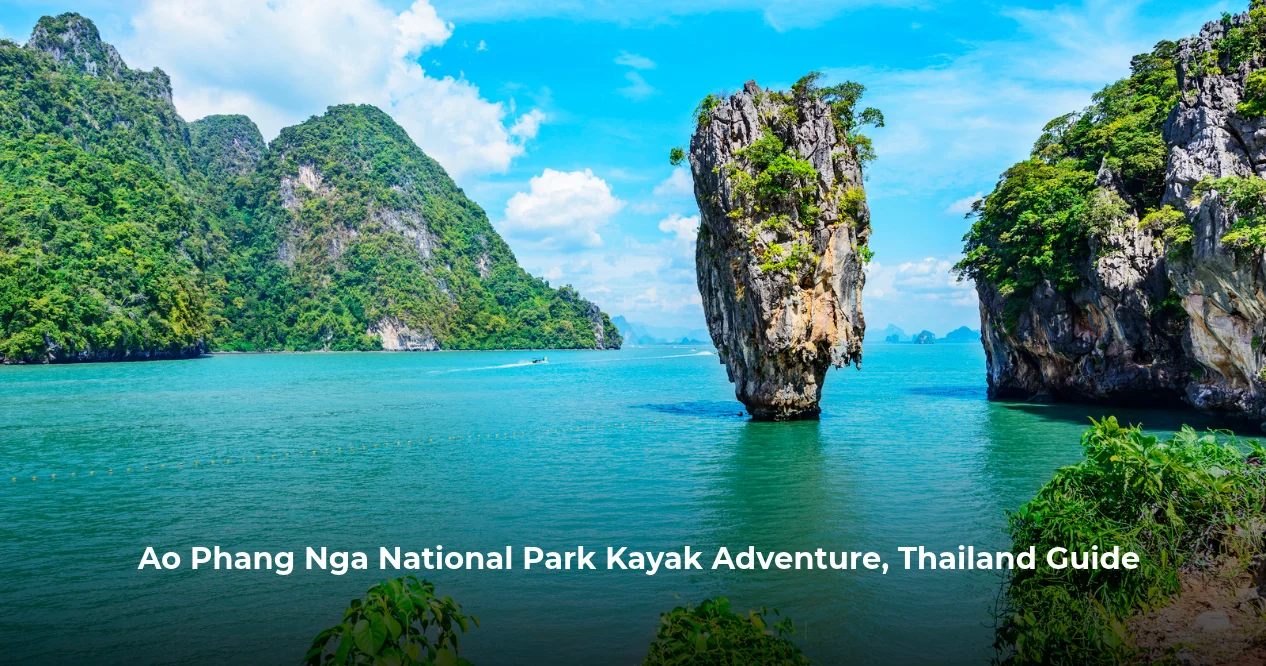
The Ao Phang Nga National Park Kayak Adventure is a water-based journey through one of southern Thailand’s most recognisable landscapes: a broad bay scattered with steep limestone islands, mangrove-lined channels, sea caves and sheltered lagoons. Rather than simply viewing Phang Nga Bay from a large sightseeing boat, the experience brings visitors close to the rock formations and quiet waterways that make this protected coastal area so memorable.
Ao Phang Nga National Park lies in Phang Nga Province between Phuket and Krabi. Day tours often begin with a road transfer to a pier or marina, followed by boat travel into the bay and guided kayaking or sea-canoeing at selected islands. Exact routes change with tides, weather, marine conditions and the operator’s daily plan, so every departure has a slightly different rhythm.
What Makes This Kayak Adventure Special
The defining feature is the contrast between open water and enclosed natural spaces. Long-tail boats and larger excursion vessels provide the wider views of Phang Nga Bay’s iconic karsts, while a kayak or inflatable sea canoe allows a slower approach to mangrove edges, cave entrances and small passages that larger boats cannot enter.
On a guided paddle, expect the soundscape to change quickly. Engine noise fades behind limestone walls, water becomes calmer in protected channels, and the landscape narrows into a world of roots, rock textures and tropical vegetation. Some itineraries may include a guide who paddles the canoe, which can be particularly helpful where access depends on tides or low cave ceilings.
Main Highlights
- Close-up views of Phang Nga Bay’s limestone karsts rising almost vertically from the sea.
- Gentle exploration of mangrove waterways and sheltered coastal habitats.
- Possible entry into sea caves or hong-style enclosed lagoons when tide levels permit.
- Time on the water away from the busier viewpoints and roads of Phuket.
- Changing light across cliffs, open water and forested island interiors.
What Visitors Can Expect
This is an active sightseeing experience, but it need not be a strenuous expedition. The amount of personal paddling depends on the booked option and operating conditions. Some trips use guided sea canoes, while others offer kayaks for guests to paddle. Read the trip description carefully before reserving, especially if you expect to paddle independently.
Boat travel is an essential part of the day, and conditions can range from smooth to bumpy depending on wind and season. Caves and lagoons are natural environments rather than engineered attractions, so access is never guaranteed. A responsible operator may alter, shorten or replace a stop if weather, tides or safety conditions require it.
How to Plan Your Visit
Start by checking the current Ao Phang Nga National Park Kayak Adventure listing on tripXOXO. Look beyond the headline itinerary and review the departure point, pickup zone, guide language, meal arrangements, national park fees, paddle format and any minimum age guidance. These details can differ between departures and are more useful than assuming that all Phang Nga Bay tours operate alike.
Pricing is not fixed across every kayak adventure because boat type, transfer area, group size, meals, park charges and included activities can all affect the total. Treat the live booking page as the most reliable place to see the current price and inclusions. Check the official website for the latest updates before committing to a date.
Departure times also vary according to the meeting point, season and planned route. A full-day experience often starts early because transfers and marine travel take time, but guests should follow the time shown on their booking confirmation rather than relying on a generic schedule. Arriving early is particularly important at marinas, where boats may leave on a tide-sensitive timetable.
Choosing the Right Day
Phang Nga Bay is visited throughout the year, although weather patterns influence comfort and visibility. The generally drier period from November to April is popular for marine excursions, while the wetter months can bring dramatic skies, greener scenery and a greater chance of rain or itinerary changes. A forecast is useful, but the operator’s safety assessment matters more than a weather app.
If photography is a priority, a morning departure may bring softer light and more comfortable temperatures. Travellers who value quieter water should avoid assuming that a particular island will be empty; group-tour traffic changes daily. The most rewarding approach is to focus on the natural setting rather than trying to recreate a single social-media image.
Best Photo Spots
The strongest photographs often come from the transitions within the trip. On the main boat, look for wide compositions of karsts layered across the horizon. From a kayak or canoe, frame limestone walls with a low waterline perspective, or use mangrove roots and cave openings as foreground detail.
Inside a sheltered lagoon, photograph reflections only when the guide confirms it is safe to pause. A wide-angle lens can capture the height of the cliffs, while a phone in a waterproof pouch is often more practical than changing camera lenses on a moving boat. Keep flash off around wildlife and cave environments, and respect any instruction to avoid particular areas.
Transport and Arrival Advice
Travellers staying in Phuket frequently use an organised hotel pickup when it is included, while others may be directed to a designated marina or pier. Phang Nga Province has multiple access points to the bay, so do not book independent transport until the operator confirms the exact meeting location. Pickup coverage and any supplement for remote hotels should be verified before the activity date.
Carry your booking confirmation, a charged phone and enough time for traffic. Phuket road journeys can be slower than expected, especially during busy holiday periods. If you are prone to motion sickness, prepare before leaving your hotel and seek medical advice about suitable medication if needed.
Accessibility and Family Planning
This adventure involves marine travel and potentially stepping between pier, boat and canoe. Surfaces can be wet, caves may have uneven natural edges, and boarding can be affected by tide level. Travellers who use mobility aids, have balance concerns or are pregnant should discuss the practical demands with the operator before booking rather than relying on general descriptions.
Families should assess the whole day, not only the kayaking segment. Children need to be comfortable wearing a life jacket, sitting during boat transfers and following safety directions near water. Bring sun protection, spare clothes and snacks appropriate for the child, while confirming age limits and child-pricing rules on the current product page.
Common Mistakes to Avoid
A frequent mistake is treating the excursion as a guaranteed cave-access tour. Tides control many passages, and a route change is often evidence of good safety practice rather than poor service. Another is arriving with valuables unprotected; saltwater spray, rain and wet hands can quickly damage electronics.
Visitors also underestimate the day’s sun exposure. Reflected light from the water can feel intense even on an overcast day, especially when sitting in an open boat. Wear reef-conscious sun protection where possible, use a hat that can be secured against wind, and drink water steadily.
Visitor Tips
- Confirm whether your booking uses a kayak, a guide-paddled sea canoe or both.
- Bring a waterproof dry bag for phones, medication and travel documents.
- Wear light clothing that can get wet and dries quickly after splashes.
- Choose water shoes or sandals with a secure heel strap for wet boarding areas.
- Apply sun protection before departure and pack extra for the return journey.
- Carry a reusable water bottle if the operator permits it.
- Listen closely to life-jacket and cave-entry instructions from the crew.
- Avoid touching mangroves, cave walls, corals or wildlife while on the water.
- Pack a small towel and a dry change of clothes for the drive back.
- Keep expectations flexible because route decisions depend on sea and tide conditions.
Nearby Things to Do
- Visit the James Bond Island area, known for its striking limestone pinnacle and cinematic setting.
- Explore Koh Panyee, the well-known stilt village in Phang Nga Bay.
- Spend time at Samet Nangshe Viewpoint for elevated views across the bay.
- Visit the mangrove landscapes and local communities around Phang Nga town.
- Continue toward Phuket’s east coast for additional island and bay excursions.
Travellers building a wider Phuket and Phang Nga itinerary can combine marine scenery with cultural stops, viewpoints and island experiences. The tripXOXO CITY Pass can be worth considering when several eligible attractions are planned in the same trip, as it may simplify booking and help organise a multi-experience itinerary. Review the current pass terms and participating activities before relying on it for a particular date.
Conclusion
The Ao Phang Nga National Park Kayak Adventure is best approached as a flexible nature excursion rather than a tightly scripted attraction. Its real appeal lies in moving through a protected seascape at water level, where limestone, mangroves and changing tides shape the experience. Book with realistic expectations, protect your belongings from water and give the day enough time to unfold at the pace of the bay.
Location: Ao Phang Nga National Park, Phang Nga Province, southern Thailand, near Phuket and Krabi.
Recommended duration: Allow most of a day when boat transfers, kayaking, waiting time and return travel are included.
Best time to visit: The drier months from roughly November to April are generally popular, although conditions and departures depend on weather and tides.
Getting there: Many organised departures use hotel pickup or marina meeting points in Phuket or Phang Nga. Confirm the exact collection area before booking.
Accessibility: Sea transfers, floating pontoons and cave access can be physically demanding. Travellers with mobility needs should confirm suitability directly with the operator.
Family friendliness: The experience can suit families with confident children, but cave conditions, water access, boat travel and supervision requirements should be considered carefully.
Frequently Asked Questions:
Q) How can I combine the Ao Phang Nga National Park Kayak Adventure with other attractions?
A) A wider Phang Nga itinerary works best when marine activities are balanced with land-based viewpoints or cultural stops. The tripXOXO CITY Pass may help organise eligible experiences in one booking plan. Check participating attractions carefully, then leave enough time between activities for boat transfers and road travel.
Q) Is the kayak adventure accessible for travellers with limited mobility?
A) Access can be challenging because piers, boats and canoes may involve steps, uneven footing and wet surfaces. Assistance levels vary by operator and tide conditions. Contact the provider before booking to discuss mobility needs, transfer methods and whether the day is realistically suitable.
Q) Can attraction passes help save money on a Phang Nga kayaking itinerary?
A) Savings depend on the attractions selected, the current pass rules and the individual booking prices. The tripXOXO CITY Pass may offer value when its eligible activities match a traveller’s actual plans. Compare the live pass details with separate reservations before purchasing, especially during promotional periods.
Q) How should travellers plan several experiences around the kayak adventure?
A) Plan the kayaking day first because boat timing, tides and transfers create the least flexibility. The tripXOXO CITY Pass can support a broader schedule of eligible activities around Phuket and Phang Nga. Keep the evening after the trip relaxed, since a full marine excursion can be tiring.
Q) Do I need previous kayaking experience for this adventure?
A) Previous experience is not always required, particularly on guided sea-canoe departures. The crew usually explains basic safety procedures before entering the water. Confirm the exact paddle format when booking, because independently paddled kayaks can demand more confidence than a guide-operated canoe.
Q) How long should I allow for the Ao Phang Nga National Park Kayak Adventure?
A) Most visitors should reserve most of a day for the complete experience. Road transfers, pier check-in, boat travel and weather-related adjustments all add time. Follow the duration on your specific reservation, then avoid booking a fixed evening commitment immediately afterward.
Q) Are life jackets provided during the kayaking trip?
A) Marine tour operators normally use life jackets as part of their safety procedures. Guests should wear them as instructed during boat transfers and water activities. Check the current product information if you need a particular size or are travelling with a young child.
Q) What happens if weather affects the planned kayak route?
A) Weather, wind and tide levels can require the crew to change a route or skip a cave. Such decisions protect guests and the natural environment. Read the booking conditions before travel, because operator policies for altered itineraries and cancellations can vary.
Q) Can I bring my phone and camera on the water?
A) A phone or camera can be brought only if it is properly protected from spray and rain. Use a sealed waterproof pouch or dry bag rather than relying on a standard case. Keep devices secured to your person, since small items can be difficult to recover from water.
Q) Are sea caves always included on the Ao Phang Nga kayak adventure?
A) Cave access depends on the chosen itinerary, water level and safety assessment on the day. Low ceilings and tide-sensitive passages are not suitable in every condition. Think of cave exploration as a possible natural highlight, not an unconditional inclusion.
Q) Is the experience suitable for children?
A) Families often enjoy the calm scenery and guided water-based format. Each child should be comfortable on boats and able to follow crew instructions near water. Confirm age requirements, seating arrangements and child equipment with the operator before making a reservation.
Q) Why can the itinerary change at short notice?
A) Phang Nga Bay activities operate in a natural marine environment shaped by tides, wind and rainfall. Guides may adjust stops to maintain safe access to boats, caves and lagoons. Flexible expectations make the day more enjoyable and allow the crew to choose the best available route.
Q) What is the best season for Phang Nga Bay kayaking?
A) Many travellers favour the drier months, generally from November through April, for marine excursions. Conditions remain variable because local weather can change quickly. The best date is one with a safe confirmed departure, so check current forecasts and operator updates close to travel.
Q) Is motion sickness a concern on the boat transfer?
A) Some visitors feel motion sickness during open-water sections, especially when wind creates choppier conditions. Preparation is easier when done before reaching the pier. Speak with a pharmacist or healthcare professional about suitable remedies, and choose a seat with fresh air when possible.
Q) Are meals included with the kayaking tour?
A) Meal and refreshment arrangements vary by the product option and operating schedule. Some longer excursions include food, while others provide only drinking water or require guests to bring snacks. Review the live inclusions list before booking, particularly if you have dietary requirements.
Q) Can I visit Ao Phang Nga National Park from Phuket?
A) Phuket is a common base for travellers joining Phang Nga Bay excursions. The journey usually combines a road transfer with marina or pier departure procedures. Confirm pickup availability for your hotel, because remote areas may have different arrangements or added transfer time.
Q) Is there a lot of paddling involved?
A) The physical effort varies significantly between independent kayaks and guide-paddled sea canoes. A guided canoe can be gentler for visitors who want to focus on scenery. Read the activity description closely, then choose an option that matches your fitness and confidence.
Q) What should I do if I have dietary or medical needs?
A) Share dietary requirements and relevant medical considerations with the operator before the travel date. This gives the team time to confirm whether meals, transport and activity conditions are suitable. Carry essential medication in a waterproof bag and do not assume it will be available locally.
Q) Are there toilets during the excursion?
A) Toilet access depends on the boat type and the day’s operating plan. Facilities may be available at departure piers and on some larger vessels. Use facilities before setting off, and ask the crew discreetly about onboard arrangements if this is important for your comfort.
Q) What wildlife might I see in Phang Nga Bay?
A) Mangrove areas can support birds, fish, crabs and other small coastal species. Sightings are never guaranteed because wildlife moves according to season and conditions. Observe quietly from the boat or kayak, and avoid feeding or touching animals to minimise disturbance.
Q) Is sunscreen important on an overcast day?
A) Sun protection remains important because ultraviolet exposure can be strong through cloud cover. Water reflection can increase exposure while sitting in an open boat. Apply protection before departure, wear a hat that stays secure in wind, and reapply according to product directions.
Q) Can I use a drone in Ao Phang Nga National Park?
A) Drone use may be restricted in national park areas and can also affect wildlife or other visitors. Permission requirements can change, particularly around protected landscapes and marine zones. Do not launch equipment without confirming current rules through the relevant authorities and operator.
Q) Are lockers available at the meeting point?
A) Locker availability differs between piers, marinas and individual tour operators. Many excursions do not provide secure storage for larger valuables. Bring only what you can protect and carry, then ask the operator in advance if storage is essential.
Q) What nearby attractions are worth visiting after kayaking?
A) Samet Nangshe Viewpoint offers a very different perspective over Phang Nga Bay’s karst landscape. Koh Panyee and the James Bond Island area are also widely associated with bay sightseeing. Choose only one additional stop if energy is limited after a full day on the water.