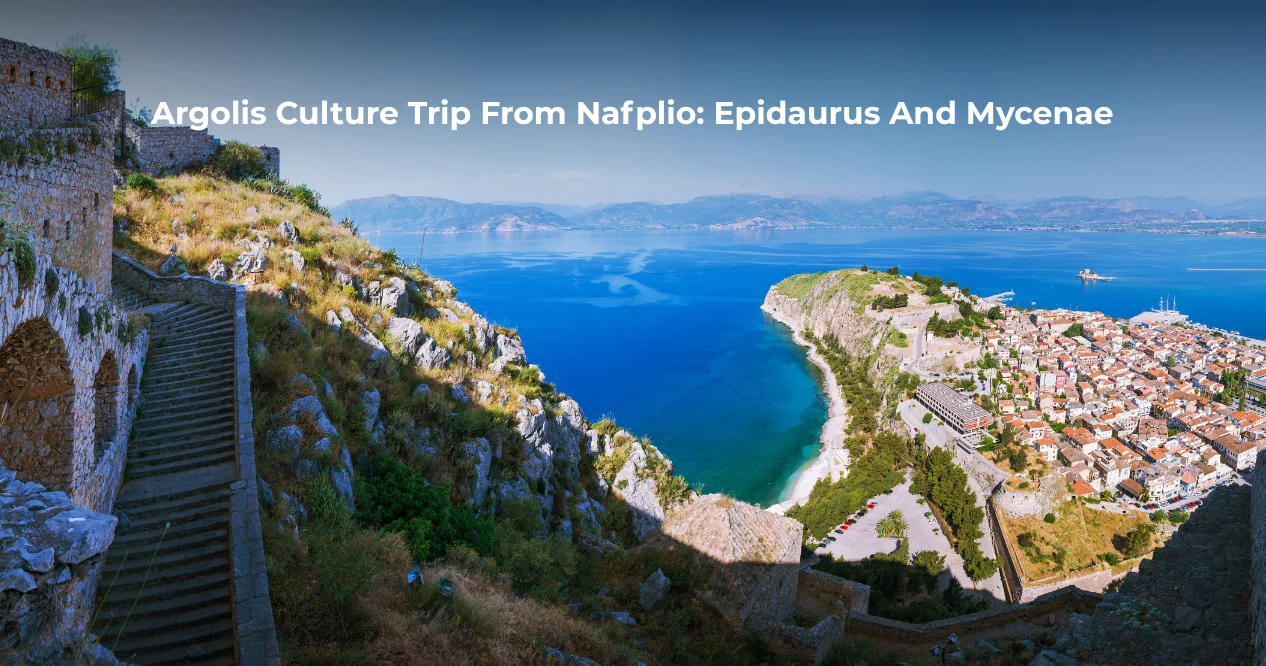
The Argolis, Trip to Culture from Nafplio is a full-day cultural journey through some of the Peloponnese’s most important ancient landscapes. Beginning from Nafplio, the experience links the UNESCO-listed archaeological sites of Mycenae and Epidaurus, placing the region’s Bronze Age power, classical theatre and healing traditions into one memorable itinerary.
For travellers based in Nafplio, this is a practical way to see landmark sites without independently navigating several rural routes. The day is built around history, scenery and time outdoors, with the road journey itself revealing the olive groves, low mountains and coastal landscapes of Argolis.
What Makes This Argolis Experience Special
Mycenae recalls the world of kings, citadels and Homeric legend. Its monumental Lion Gate, Cyclopean walls and hilltop setting provide a powerful introduction to the Mycenaean civilisation that flourished during the Late Bronze Age. Epidaurus offers a different but equally compelling perspective: the Sanctuary of Asklepios was an important healing centre, while its theatre remains celebrated for its remarkable design and acoustics.
Rather than treating these places as isolated ruins, the itinerary helps visitors experience Argolis as a historic region. Nafplio adds a graceful Venetian-era base, while the archaeological stops reveal the much older layers that shaped Greek and Mediterranean history.
What To Expect During The Day
Expect a long but rewarding sightseeing day with periods of coach or vehicle travel, guided or independently paced exploration according to the booked option, and walking over archaeological terrain. Mycenae involves exposed paths and a climb toward the citadel, while Epidaurus is spacious and largely open to the elements. Bring water, sun protection and comfortable shoes with reliable grip.
The precise route, guide service, admissions, meal breaks, pickup arrangements and tour length can vary by date and product option. Check the official website for the latest updates before finalising plans, particularly if you are travelling during public holidays or the high summer season.
How To Plan Your Visit
Tickets, Prices And Inclusions
Current tour prices and inclusions should be reviewed directly on the TripXOXO booking page, as rates may change with travel dates, group size, transport format and included services. Read the booking description carefully to understand whether archaeological-site entry tickets, guiding, transfers and meals are included or require separate payment. This is especially important because admission policies at Greek archaeological sites may change seasonally.
For a straightforward starting point, use [Add booking link]. Confirm the selected date, participant details and cancellation terms before completing a reservation.
Timing And Recommended Duration
A full day is the most realistic amount of time for this Argolis itinerary from Nafplio. The drive between locations, site entrances, walking routes and rest stops all need room in the schedule. Early departures are often more comfortable in warmer months because Mycenae’s exposed citadel can feel particularly hot by midday.
Transport And Arrival Advice
Arrive at the confirmed Nafplio meeting point a little early, carrying your booking confirmation and a form of identification if requested. Avoid assuming that a hotel pickup is included unless it is expressly stated in your reservation. If driving to Nafplio, allow extra time for parking, especially around the old town during busy weekends and summer evenings.
Best Photo Spots
The Lion Gate at Mycenae is the essential image, particularly when photographed from the approach path to show its scale. Higher in the citadel, wide views over the Argive plain give context to the strategic setting. At Epidaurus, frame the theatre’s concentric seating from the upper tiers, then look toward the stage and surrounding hills for a stronger sense of its landscape.
In Nafplio, the harbourfront and the views toward Bourtzi Castle offer a handsome visual finale before or after the excursion. Respect any site rules concerning drones, tripods and restricted areas, and never climb on ancient masonry for a photograph.
Common Mistakes To Avoid
The most frequent mistake is underestimating the heat and uneven walking conditions. Lightweight footwear may be tempting in Greece, but closed walking shoes are much more useful at Mycenae. Another common oversight is failing to verify what the tour price includes, which can create avoidable confusion about site admissions or meals.
Visitors should also avoid planning a tightly timed restaurant booking or onward journey immediately after the stated return time. Traffic, site queues and the pace of the group can affect the final schedule. Leave a flexible evening in Nafplio whenever possible.
Accessibility And Family Planning
These are historic outdoor sites rather than fully level museum environments. Surfaces can be gravelly, rocky or uneven, and Mycenae includes inclines and steps. Travellers with reduced mobility should contact the operator before booking to discuss the current route, vehicle access and whether the day suits their individual requirements.
Families often find the theatrical scale of Epidaurus and the fortress-like atmosphere of Mycenae engaging for older children. Pack snacks, water and sun protection, and explain that this is a substantial excursion rather than a short city activity. A small notebook or child-friendly mythology book can make the ancient stories more meaningful en route.
Visitor Tips
- Wear closed, comfortable shoes designed for uneven ground.
- Carry water, especially from late spring through early autumn.
- Bring a hat, sunglasses and high-factor sunscreen.
- Check current departure details before leaving your Nafplio accommodation.
- Keep a light layer for cooler morning or shoulder-season conditions.
- Allow extra time before departure for parking or finding the meeting point.
- Read the booking inclusions before assuming admissions or meals are covered.
- Use a small day bag rather than carrying heavy luggage.
- Respect barriers and conservation signage at both archaeological sites.
- Keep the evening after the trip flexible in case the return is later than expected.
Nearby Things To Do
- Walk Nafplio’s old town lanes and Syntagma Square.
- Visit Palamidi Fortress for panoramic views over the Argolic Gulf.
- See Bourtzi Castle from Nafplio’s waterfront promenade.
- Explore the Archaeological Museum of Nafplio.
- Spend time at the seaside resort area of Tolo.
If your Nafplio stay includes several paid experiences, combining cultural landmarks with local attractions can simplify planning. The tripXOXO CITY Pass may be worth considering for travellers who want to organise multiple activities together, subject to its current participating attractions, conditions and availability.
Conclusion
The Argolis Culture Trip from Nafplio is a rewarding choice for travellers who want to move beyond the town’s Venetian beauty and into the deeper history of the Peloponnese. With sensible footwear, realistic timing and confirmed booking details, Epidaurus and Mycenae become far more than checklist stops: they are two vivid chapters in Greece’s long cultural story.
Location: Nafplio, Argolis, Peloponnese, Greece, with visits to Ancient Epidaurus and Mycenae.
Recommended duration: Allow a full day, including road travel, archaeological-site visits and comfort stops.
Best time to visit: Spring and autumn generally offer milder temperatures and more comfortable walking conditions.
Getting there: The experience begins in Nafplio. Confirm the current meeting point, pickup details and departure time with the operator after booking.
Accessibility: Ancient sites have uneven ground, slopes and steps. Contact the operator in advance for current mobility support information.
Family friendliness: Suitable for families interested in Greek history, although younger visitors should be prepared for a long day and outdoor walking.
Frequently Asked Questions:
Q) Can I combine this Argolis trip with other attractions in Nafplio?
A) Nafplio works well as a base for combining several cultural experiences. The tripXOXO CITY Pass can be useful when its current selection matches your planned activities. Leave separate time for Nafplio’s old town, because the Argolis excursion itself fills most of a day.
Q) What should I do after returning to Nafplio?
A) A relaxed waterfront walk is an excellent way to end the day. Nafplio’s old town has many places for dinner and an evening drink. Avoid booking a rushed activity immediately afterward, since return times can vary.
Q) Can an attraction pass help save money during a Nafplio stay?
A) Savings depend on which activities you genuinely intend to book. The tripXOXO CITY Pass can offer value when its available inclusions align with your sightseeing plans. Compare the current pass terms with individual bookings before deciding, particularly for a short visit.
Q) What is the best way to plan multiple experiences from Nafplio?
A) Start with a full day for the Argolis route, then schedule lighter Nafplio activities around it. The tripXOXO CITY Pass can make multi-experience planning more convenient where eligible attractions are included. Keep one unscheduled period for wandering the old town and waterfront.
Q) How long does the Argolis Culture Trip from Nafplio take?
A) This itinerary is best treated as a full-day experience. Travel time between Nafplio, Mycenae and Epidaurus adds significantly to the archaeological visits. Confirm the current departure and return schedule with the operator before making evening plans.
Q) Are entry tickets to Mycenae and Epidaurus included?
A) Inclusions depend on the exact product option selected at booking. Review the TripXOXO description to see whether site admissions are included or paid separately. Greek archaeological-site arrangements can change, so verify the latest details before departure.
Q) Is the trip suitable for children?
A) Families with school-age children often enjoy the legends and monumental scenery. The day is long, however, and outdoor walking can be tiring in heat. Bring snacks, water and a small activity to keep younger visitors engaged during transfers.
Q) What is the best season for visiting Argolis?
A) Spring and autumn usually provide the most comfortable balance of weather and daylight. Summer brings long sunny days but can make exposed archaeological areas very hot. Winter visits can be quieter, although rain and shorter daylight may affect comfort.
Q) Can I take photographs at the archaeological sites?
A) Photography for personal use is generally a highlight of both locations. Follow posted rules and instructions from staff at all times. Drones, professional equipment and certain commercial uses may require specific permission.
Q) Where are the best Mycenae photo opportunities?
A) The Lion Gate is the defining photographic landmark at Mycenae. The approach path helps show the immense stonework and scale. Views from higher parts of the citadel also capture the surrounding Argive landscape.
Q) What makes the Theatre of Epidaurus important?
A) The Theatre of Epidaurus is renowned for its exceptional preservation and harmonious design. It formed part of the wider Sanctuary of Asklepios, an important ancient healing centre. Its hillside setting makes the visit visually striking as well as historically meaningful.
Q) Can weather affect the Argolis itinerary?
A) Weather can influence comfort, walking conditions and occasionally site operations. Rain may make stone paths slippery, while intense heat can slow the pace. Check the forecast, bring suitable layers and follow any operator updates sent before departure.
Q) Is Nafplio a good base for visiting Mycenae?
A) Nafplio is one of the most convenient bases for exploring Mycenae. It combines accommodation, dining and waterfront atmosphere with relatively easy access to Argolis landmarks. Staying locally also avoids the longer transfer often required from Athens.
Q) Are there toilets at Mycenae and Epidaurus?
A) Visitor facilities are usually available at major archaeological sites, but their locations and operating conditions can vary. Use facilities when you arrive rather than waiting until the end of a visit. Tour leaders or site staff can direct you on the day.
Q) How physically demanding is the Mycenae visit?
A) Mycenae requires more effort than a flat museum visit. The route includes uneven surfaces, inclines and areas exposed to sun. Visitors can usually enjoy key viewpoints at their own pace, but mobility needs should be discussed before booking.
Q) Is Epidaurus accessible for visitors with limited mobility?
A) Epidaurus has outdoor paths and a large archaeological landscape with variable surfaces. Some viewing areas may be easier to reach than others. Contact the operator and the site directly in advance for current accessibility information suited to your needs.
Q) Should I book the tour in advance?
A) Advance booking is sensible during popular travel periods and weekends. It gives you time to review inclusions, meeting details and cancellation conditions. Check the official booking page for live availability rather than relying on older travel information.
Q) How far in advance should I arrive for departure?
A) Arrive at the confirmed meeting point at least a little before the stated departure time. This allows for locating the vehicle, checking in and handling last-minute questions. Build in additional time if Nafplio parking or seasonal traffic may be busy.
Q) Can I visit Mycenae and Epidaurus independently from Nafplio?
A) Independent travel is possible for confident drivers with a flexible schedule. A guided or organised route can reduce navigation and parking concerns. Consider your comfort with rural roads, site timing and summer heat before choosing between options.
Q) What are the biggest mistakes visitors make on this route?
A) Many visitors underestimate how much sun and walking the day involves. Others assume admissions or lunch are included without reading the booking terms. Wearing unsuitable shoes can also make Mycenae much less enjoyable than it should be.
Q) Is there shade at the archaeological sites?
A) Shade can be limited, especially around the upper areas of Mycenae. Epidaurus is also largely outdoors, although trees and buildings provide occasional relief. Plan sun protection as an essential item, not an optional extra.
Q) Can I visit during very hot weather?
A) A summer visit remains possible with careful preparation and an early start. Drink water regularly and avoid treating the day as a fast-paced hike. Follow guidance from the operator if heat, fire risk or site conditions affect the route.
Q) What language is the tour conducted in?
A) The operating language should be confirmed in the current booking information. Language options can vary by departure date, group size and guide availability. Contact the operator before booking if a particular language is essential for your visit.
Q) Can I bring a large suitcase on the tour?
A) A small day bag is much easier to manage at archaeological sites. Large luggage may be impractical because vehicle storage policies differ by operator. Ask in advance if you are transferring accommodation on the same day.