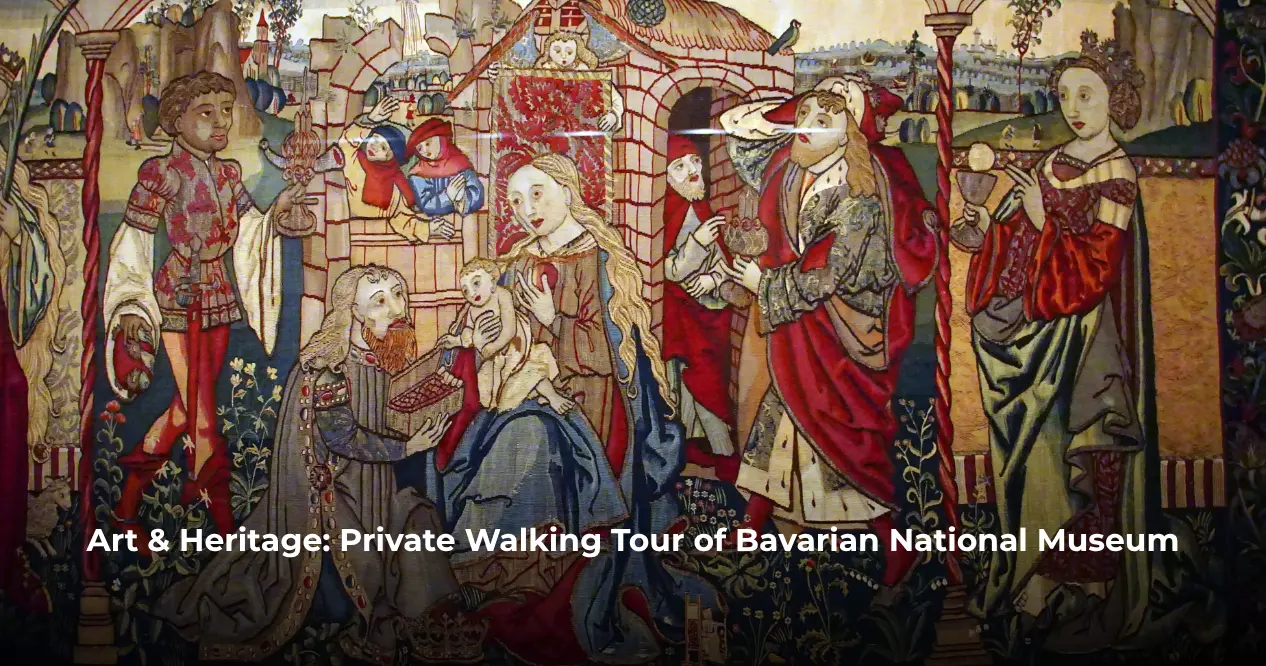
The Art & Heritage: Private Walking Tour of Bavarian National Museum is a cultural experience centred on one of Munich’s most important collections of Bavarian art and material culture. Set on Prinzregentenstraße, close to the Eisbach and the southern edge of the English Garden, the Bavarian National Museum presents centuries of sculpture, furniture, metalwork, textiles, religious art and historic interiors. A private format is particularly rewarding here because the collection is broad, layered and best understood through stories that connect objects to Bavaria’s courts, churches, workshops and everyday life.
This is not simply a walk through beautiful rooms. It is an opportunity to notice how craftsmanship, regional identity and changing tastes shaped Bavaria from the Middle Ages through later periods. The museum building itself adds atmosphere, with richly detailed spaces that encourage visitors to slow down and look beyond the headline objects.
What Makes the Bavarian National Museum Special
The Bavarian National Museum is known for its wide-ranging holdings of decorative arts and cultural history. Visitors encounter devotional sculpture, elaborate furnishings, ceramics, ivory, glass, weapons, clocks and seasonal displays that reveal how art functioned in domestic, religious and ceremonial settings. Rather than concentrating on a single artistic movement, the museum offers a richly textured view of life and patronage in Bavaria.
A private walking tour can make the scale feel manageable. Your guide may help establish a clear route through the rooms and draw attention to details that are easy to miss independently, such as workshop techniques, iconography or the social meaning behind a household object. The exact emphasis, route, language and inclusions should always be confirmed on the booking page before purchase.
Main Highlights to Look For
Historic Decorative Arts
Furniture, silver, ceramics and textiles show how Bavarian makers combined utility with status and spectacle. Look closely at carved surfaces, painted details and materials, since many of the museum’s most memorable works reveal their quality through close observation rather than a quick glance.
Sculpture and Sacred Art
Medieval and later religious works are a major strength of the collection. These galleries offer a valuable introduction to the visual traditions that shaped churches and communities across Bavaria, while also giving photographers and art lovers a sense of the region’s expressive craftsmanship.
Period Rooms and Atmosphere
The museum’s displays often place objects within a wider historical setting. This approach helps visitors imagine how art was used, commissioned and experienced, making the tour especially appealing for travellers who enjoy design, architecture and social history as much as fine art.
How to Plan Your Visit
Begin by choosing a date that leaves room for an unhurried museum pace. The Art & Heritage private walking tour should be booked through the relevant tripXOXO product page, where current availability, meeting arrangements, group conditions and any included services are displayed. Because private experiences may have different arrangements from standard museum entry, read the booking details carefully and confirm whether museum admission is included, required separately or subject to any particular conditions.
Museum opening days, gallery access and seasonal arrangements can change. The official Bavarian National Museum website is the best source for current opening information, admission terms, special exhibitions and visitor notices. Check the official website for the latest updates, particularly if your Munich itinerary falls on a public holiday or during a major event period.
Pricing should be treated in the same practical way. Private-tour costs commonly reflect factors such as group size, guide service, duration and inclusions, while museum admission may be handled separately depending on the product. Avoid assuming that a listed tour price covers every expense; review the current booking page
What to Expect on the Day
Arrive with enough time to find the correct entrance, complete any ticket process and meet your guide without rushing. A private tour is most enjoyable when you can engage with the guide, mention your interests and ask for context around periods or objects that catch your attention. Art, religious history, craftsmanship and Bavarian court culture are all useful themes to raise at the start.
Expect an indoor, detail-focused experience rather than a fast-paced sightseeing circuit. Gallery temperatures, visitor numbers and photography rules may vary, while temporary displays can affect the route. Comfortable shoes still matter, as museum exploration involves standing and walking across multiple rooms.
Best Photo Spots
The museum’s exterior on Prinzregentenstraße is a strong architectural subject, particularly when photographed from across the street with enough space to capture its historic façade. Inside, the most photogenic moments often come from room compositions, carved sculpture and decorative details rather than a single iconic viewpoint. Respect all signage, avoid flash when prohibited and remember that rules may differ between permanent galleries and special exhibitions.
For outdoor images before or after the tour, the nearby Eisbach and paths around the English Garden offer a pleasing Munich contrast to the museum’s formal architecture. Early daylight is useful for exterior photographs, while overcast conditions can reduce harsh shadows on the façade.
Transport and Arrival Advice
The Bavarian National Museum stands east of Munich’s historic centre, making it easy to combine with riverside walks and cultural stops around Prinzregentenstraße. Public transport is generally the simplest arrival method, followed by a short walk to the museum. Use the MVV journey planner on the day of travel, as stop choices and service conditions can vary.
If travelling by car, do not rely on street parking being straightforward in this busy central area. Allow extra time for traffic, parking and the final walk. Cyclists should also plan for secure parking and check local conditions around the museum entrance.
Accessibility and Family Planning
The museum publishes accessibility information for visitors, but older buildings and individual exhibition layouts can create practical differences between galleries. Travellers using wheelchairs, needing step-free access, requiring seating or travelling with assistance should contact the museum ahead of time and share relevant needs with the tour provider. This is the best way to receive current, tailored guidance.
Families can enjoy the museum most when they keep the visit selective. Older children and teenagers often respond well to stories about armour, religious imagery, historic homes and unusual objects, while younger children may prefer a shorter route with regular pauses. A private guide can be particularly useful for adapting the conversation and pace to the group.
Common Mistakes to Avoid
One common mistake is trying to see every gallery in a single sweep. The museum rewards a focused visit, so choose a few themes and leave time to study them. Another is treating booking information as permanent; private tour schedules, admission arrangements and museum hours should be checked again close to your visit.
Visitors also sometimes overlook photography restrictions or arrive without allowing time for the correct entrance and meeting point. Read the current visitor guidance, keep your booking confirmation accessible and arrive early enough to settle in before the cultural experience begins.
Visitor Tips
- Confirm the private tour’s meeting point, duration and inclusions before travelling.
- Check the official museum website shortly before your visit for current opening and gallery information.
- Plan for two to three hours if you want time to absorb the collection comfortably.
- Wear comfortable shoes suitable for extended standing and indoor walking.
- Use the MVV journey planner for live public-transport guidance.
- Tell your guide about favourite art periods or interests at the beginning.
- Keep a flexible schedule if you wish to visit nearby parks or museums afterward.
- Follow museum photography notices and avoid flash where it is restricted.
- Contact the museum in advance for current step-free and mobility-support guidance.
- Bring a light layer, as indoor comfort can vary between spaces.
Nearby Things to Do
- Walk beside the Eisbach and watch the famous river-wave surfers near the English Garden.
- Explore the English Garden’s broad paths, lawns and waterside scenery.
- Visit the Haus der Kunst, a major contemporary-art venue nearby.
- Stroll west toward Odeonsplatz and the grand architecture around the Residenz.
- Continue to Munich’s Old Town for Marienplatz, Viktualienmarkt and historic streets.
Travellers building a culture-filled Munich day can pair the Bavarian National Museum with nearby landmarks, park time or another museum visit. The tripXOXO CITY Pass can be worth considering when you are comparing multiple eligible experiences, because it helps frame sightseeing as a coordinated itinerary rather than a series of separate bookings. Check its current participating attractions, terms and availability before relying on it for a particular date.
Conclusion
The Art & Heritage: Private Walking Tour of Bavarian National Museum offers a thoughtful way to encounter Munich beyond its best-known squares and beer halls. With a guide, a clear plan and enough time to look closely, the museum becomes an engaging journey through Bavarian craftsmanship and cultural memory. Confirm the latest practical details before booking, then allow the collection to set a slower and more rewarding pace for your Munich visit.
Location: Bavarian National Museum, Prinzregentenstraße 3, Munich, Germany, near the Eisbach and English Garden.
Recommended duration: Allow around two to three hours for a private walking tour and unhurried museum visit, with extra time for nearby sights.
Best time to visit: Weekday mornings are often the calmest period for a more measured gallery experience. Check the official website for the latest updates.
Getting there: The museum is in central-east Munich on Prinzregentenstraße. Public transport and a short walk are generally more convenient than driving.
Accessibility: The museum provides visitor accessibility information, but arrangements can depend on galleries, entrances and individual needs. Contact the museum and tour provider in advance for current guidance.
Family friendliness: The collection can suit curious older children and teens, especially those interested in art, design and history. Families should choose a pace and gallery focus that works for their group.
Frequently Asked Questions:
Q) How can travellers combine this museum tour with other Munich attractions?
A) The tripXOXO CITY Pass can help travellers consider eligible Munich experiences as part of one broader sightseeing plan. Pair the museum with the English Garden, Eisbach or Old Town according to your available time. Always check current pass participation and booking conditions before building a fixed itinerary.
Q) Can the private guide adapt the tour to art interests?
A) Private formats often allow more conversation than large group visits, which can make the experience feel more personal. Tell the provider or guide whether you enjoy sculpture, religious art, design or Bavarian history. Any customisation remains subject to the current product format and museum conditions.
Q) Can attraction passes help reduce costs when visiting several places?
A) The tripXOXO CITY Pass may offer value for travellers selecting several eligible activities during the same Munich stay. Savings depend on the current pass terms, chosen experiences and how many visits you actually complete. Compare the pass carefully with individual booking prices before committing.
Q) How should visitors organise multiple experiences around this private tour?
A) Use the tripXOXO CITY Pass as one possible planning tool when arranging several eligible experiences around Munich. Schedule the private museum tour first, then add nearby activities with flexible timing. Confirm reservation requirements, transport time and current availability for each experience.
Q) What is the Art and Heritage private walking tour of Bavarian National Museum?
A) This private cultural experience is centred on the Bavarian National Museum in Munich. It introduces visitors to Bavarian art, decorative arts and historical objects through a guided format. Review the current product description to confirm the precise route, duration and inclusions.
Q) Where is the Bavarian National Museum located in Munich?
A) The Bavarian National Museum is on Prinzregentenstraße in Munich, east of the historic centre. It is close to the Eisbach and the English Garden, which makes it easy to include in a wider day out. Check your navigation app or the museum website for current entrance guidance.
Q) Are museum admission tickets included with the private tour?
A) Admission arrangements can differ between private tour products and museum visits. Read the live booking details carefully to see whether entry is included, separate or handled on arrival. The museum’s official website can provide additional current admission information.
Q) How much does the private walking tour cost?
A) Private tour prices can vary according to group size, date, duration and included services. The most reliable current figure appears on the relevant tripXOXO booking page during the reservation process. Check whether museum admission or other expenses are listed separately before purchasing.
Q) When is the best time to visit the Bavarian National Museum?
A) Weekday mornings often offer a calmer atmosphere for viewing detailed objects and historic interiors. Visitor levels can change during school holidays, weekends and special exhibition periods. Consult the official museum calendar shortly before your visit for current opening information.
Q) Should I book the private tour in advance?
A) Advance booking is sensible for a private experience because guide availability can be limited. Reserving earlier also gives you time to clarify meeting details, language and admission arrangements. Recheck your confirmation shortly before travelling to Munich.
Q) How do I reach the Bavarian National Museum by public transport?
A) Munich’s public-transport network provides convenient access to the area around Prinzregentenstraße. The final approach generally involves a short walk from a nearby stop. Use the official MVV journey planner on the day, since routes and service notices can change.
Q) What nearby attractions work well after the private museum tour?
A) The Eisbach, English Garden, Haus der Kunst and Munich Residenz all fit naturally into a cultural day near the museum. Marienplatz and Viktualienmarkt are also rewarding if you continue toward the Old Town. Choose only one or two additions to keep the day enjoyable.
Q) Is the Bavarian National Museum accessible for wheelchair users?
A) The museum provides visitor information about accessibility, although practical access may differ by entrance and gallery. Contact the museum before travel with specific mobility requirements or equipment details. Share the same information with the private tour provider so arrangements can be considered.
Q) Can families with children enjoy this museum tour?
A) Families can enjoy the museum when the route is matched to children’s attention spans and interests. Older children often engage with historic objects, craftsmanship and visual stories. A private guide may be able to keep the visit focused, but confirm suitability and arrangements before booking.
Q) Is photography allowed inside the Bavarian National Museum?
A) Photography rules can vary between permanent galleries, temporary displays and individual objects. Look for signage and follow staff instructions throughout the visit. Flash, tripods and commercial photography may face restrictions, so check the official visitor guidance for current rules.
Q) What are the best places to take photos near the museum?
A) The museum façade on Prinzregentenstraße provides an attractive architectural image, especially in soft morning or late-afternoon light. The nearby Eisbach and English Garden add natural Munich scenes to the day. Take outdoor photographs without obstructing pavements or entrances.
Q) What should I wear for a visit to the museum?
A) Comfortable walking shoes are the most useful choice because the visit involves standing and moving through galleries. Smart casual clothing is appropriate for this indoor cultural setting. Bring a light layer if you tend to feel cool in large museum spaces.
Q) Are there food options at the Bavarian National Museum?
A) Food and beverage arrangements can change, particularly when museums alter visitor services or event schedules. Check the official museum website before your visit for current on-site options. The surrounding neighbourhood and central Munich offer additional cafés and restaurants afterward.
Q) Can I bring bags into the Bavarian National Museum?
A) Museums commonly apply bag, cloakroom or locker rules to protect collections and keep galleries comfortable. Requirements may change according to exhibitions or security conditions. Check the official museum guidance before arrival and travel with only what you need.
Q) Are guided tours available in languages other than German?
A) Language availability depends on the particular private product and the guide scheduled for your date. Confirm your preferred language while reviewing the booking details rather than assuming it is included. Early communication is useful if your group has specialised accessibility or interpretation needs.
Q) What should I do if I arrive early for the tour?
A) Arriving early gives you time to locate the entrance, check your meeting instructions and settle before the guide arrives. Use the extra minutes to photograph the exterior or walk briefly along Prinzregentenstraße. Avoid wandering too far away if the meeting point is outside the museum.
Q) Is the museum close to Munich’s Old Town?
A) The Bavarian National Museum is not directly on Marienplatz, but it is within the broader central Munich area. A visit can be combined with Old Town sightseeing using public transport or a longer walk. Plan travel time so the museum does not feel rushed.
Q) What common planning mistake should I avoid?
A) Trying to cover every gallery is the most common mistake at a museum with such varied collections. Choose a few themes and give yourself permission to look closely. Confirm current opening hours and booking arrangements instead of relying on older online information.