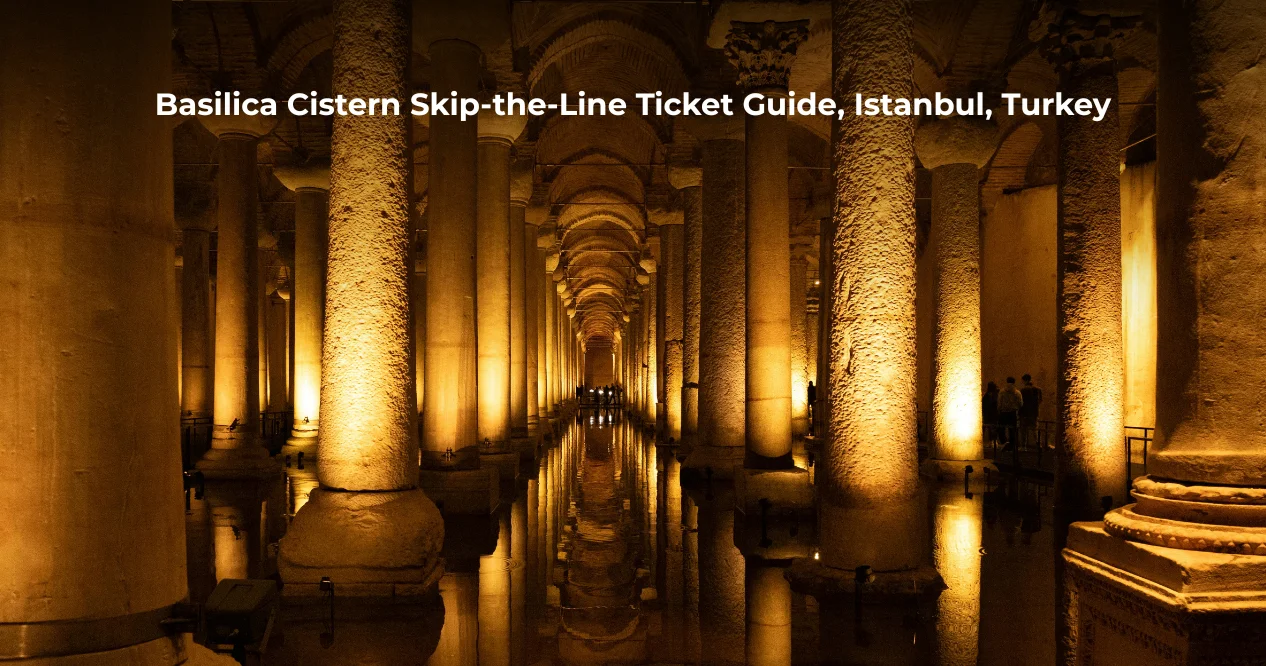
Descending into the Basilica Cistern is one of Istanbul’s most memorable changes of scene. Just below the busy streets of Sultanahmet, this vast Byzantine reservoir reveals rows of illuminated columns, shallow water reflections and an unexpectedly calm, cool atmosphere. A Basilica Cistern Skip-the-Line Ticket is designed for travellers who want to spend less of their sightseeing day waiting outside and more time experiencing one of the city’s most distinctive historic interiors.
Known in Turkish as Yerebatan Sarnıcı, the cistern was built in the sixth century during the reign of Emperor Justinian I. Its original purpose was to store water for the Great Palace and surrounding buildings. Today, the restored site is a cultural landmark operated within Istanbul’s municipal heritage network, positioned moments from Hagia Sophia, the Blue Mosque and the wider Sultanahmet square.
What Makes the Basilica Cistern Special
The scale is the first surprise. Visitors walk through a forest-like arrangement of 336 marble columns, many reused from older Roman structures, while lighting emphasizes the chamber’s immense ceiling and watery floor. The experience is not a conventional museum visit with rooms of objects; it is an immersive architectural encounter shaped by sound, shadow, humidity and perspective.
Two column bases carved with Medusa heads are the best-known details. One lies sideways and another upside down, creating a theatrical finish to the route and a reminder that components of the cistern came from earlier buildings. Look also for the Hen’s Eye Column, whose tear-shaped motifs are often linked to the labour involved in the cistern’s construction.
What Visitors Can Expect
The route leads through a low-lit subterranean hall on established visitor walkways. Expect a cooler, damper environment than outside, especially after a warm Sultanahmet walk. The mood is deliberately dramatic, and the combination of ambient music, lighting installations and monumental stonework makes the cistern feel more cinematic than many historic sites in Istanbul.
Although a skip-the-line product can reduce time spent in the main admission queue, it should not be understood as a guarantee of immediate entry at every moment. Security checks, crowd management and operational pauses can still affect access. Read the ticket conditions carefully, arrive at the stated meeting or entry point, and retain your booking confirmation on your phone.
How to Plan Your Visit
Choose Tickets With Flexibility in Mind
Ticket prices, valid entry windows, guided inclusions and cancellation terms vary by seller and season. Rather than relying on an old advertised amount, compare the official Basilica Cistern information with the conditions shown by your selected provider. Check the official website for the latest updates, particularly for public holidays, special events and temporary operational changes.
A skip-the-line ticket is most useful when Sultanahmet is busy and your day includes other timed attractions. It can be a sensible part of a tightly organised itinerary, but leave a little buffer between reservations. [Add booking link].
Pick a Comfortable Time
Early visits can offer a calmer start before the surrounding historic district fills up, while later visits can suit travellers who prefer the cistern’s atmospheric lighting after a day outdoors. Opening schedules may change, so confirm the current timetable directly with the official operator before finalising plans. Weekends, school breaks and cruise-heavy days can bring larger flows of visitors.
Allow Enough Time
Most independent visitors are comfortable with 45 to 75 minutes inside. Photographers, architecture enthusiasts and families moving at a gentler pace may want longer. Build in extra time for the short walk from the tram, security procedures, toilets outside the main route and the inevitable pause at the Medusa heads.
Transport and Arrival Advice
The Basilica Cistern is exceptionally central within the Historic Areas of Istanbul. Sultanahmet tram stop on the T1 line is the most practical public-transport reference point for many visitors, followed by a short walk through the pedestrian-heavy streets. Taxis can be useful from more distant neighbourhoods, but traffic around the old city can be slow, so a tram and walk combination is often more predictable.
Use a map before setting out because the entrance area can be busy with groups and ticket holders. Arriving a little before your planned slot gives you time to locate the correct queue and organise your digital ticket. Wear shoes with reliable grip, as historic underground environments can feel damp underfoot.
Best Photo Spots in the Basilica Cistern
The long central perspectives between columns are ideal for showing the cistern’s scale. Pause where the walkway opens onto broad views of the reflections, then frame the repeated arches symmetrically for a strong architectural image. The Medusa bases are essential photographs, though they are often the busiest point on the route.
Low light is part of the attraction’s character, so phone users will usually get better results by holding still and avoiding harsh flash. Respect posted photography rules and other visitors’ space. A quieter moment near the columns can produce a more compelling image than trying to photograph every feature quickly.
Accessibility and Family Planning
The Basilica Cistern is a historic underground monument rather than a purpose-built modern gallery. Conditions can include ramps, narrow viewing areas, crowds, low light and uneven-feeling surfaces, so travellers using wheelchairs, mobility aids or pushchairs should contact the official operator before booking to confirm current access arrangements. Check the official website for the latest updates.
Families often find the dramatic setting fascinating, especially the Medusa heads and reflections. Younger children should remain close on the walkways, and adults should prepare them for a darker environment with echoing sound and other visitors nearby. A shorter visit works well for families combining the cistern with outdoor time in Sultanahmet.
Common Mistakes to Avoid
One frequent mistake is treating a skip-the-line ticket as permission to arrive without checking its exact terms. Confirm the date, meeting instructions, identification requirements and any time window before leaving your hotel. Another is scheduling too many major landmarks back to back; the cistern is compact, but queues and walking distances around Sultanahmet can expand a rushed itinerary.
Visitors also underestimate the contrast between outdoor weather and the underground climate. Bring a light layer if you tend to feel cold, avoid slippery footwear, and do not expect strong natural light for photographs. Finally, do not leave the Medusa heads until the last possible minute if staff are managing the flow of visitors.
Visitor Tips
- Keep your ticket confirmation accessible offline in case mobile signal is weak underground.
- Arrive before your booking window so entry procedures do not compress your visit.
- Wear comfortable shoes with a secure sole for the historic walkway.
- Carry a light layer if you are sensitive to cooler, damp interior air.
- Use a quiet camera mode and avoid obstructing narrow viewing points.
- Plan photographs patiently around the Medusa heads, where visitor flow can be slow.
- Check the latest official schedule before travelling on a holiday or festival date.
- Allow buffer time if you are continuing to Hagia Sophia, Topkapı Palace or a Bosphorus departure.
- Keep children close and explain the low-light setting before entering.
- Confirm current accessibility arrangements directly with the operator when needed.
Nearby Things to Do
- Walk to Hagia Sophia for one of Istanbul’s defining Byzantine and Ottoman landmarks.
- Visit the Blue Mosque and its historic square-facing courtyard.
- Explore Topkapı Palace for imperial collections, courtyards and Bosphorus views.
- Pause in Sultanahmet Square to see the Hippodrome monuments and fountains.
- Visit the Istanbul Archaeological Museums near Gülhane and Topkapı Palace.
Travellers building a full Sultanahmet day can make their route more efficient by grouping the Basilica Cistern with nearby landmarks rather than crossing the city repeatedly. The tripXOXO CITY Pass can be worth considering when you want to combine several eligible Istanbul experiences within one wider sightseeing plan.
Conclusion
The Basilica Cistern rewards unhurried attention. Its columns, water reflections and Medusa heads offer a striking counterpoint to Istanbul’s sunlit mosques and palace courtyards above ground. With a suitable ticket, sensible timing and a little room in your schedule, this underground Byzantine landmark can become one of the most atmospheric stops in the historic centre.
Location: Alemdar, Yerebatan Caddesi 1/3, Fatih, Istanbul, Türkiye, in the Sultanahmet historic area.
Recommended duration: Allow around 45 to 75 minutes for the cistern itself, plus additional time for entry procedures and photographs.
Best time to visit: Early in the day or later in the evening can feel more comfortable; check the official website for the latest opening schedule and seasonal updates.
Getting there: The cistern is a short walk from Sultanahmet tram stop and sits close to Hagia Sophia, the Blue Mosque and Topkapı Palace.
Accessibility: The historic underground setting has ramps, corridors and changing surfaces. Visitors with mobility needs should check the official website directly before booking.
Family friendliness: Suitable for families who are comfortable in a dim, atmospheric underground space, with close supervision recommended around walkways and crowds.
Frequently Asked Questions:
Q) How can I combine the Basilica Cistern with other Istanbul attractions?
A) The Basilica Cistern fits naturally into a Sultanahmet walking day because Hagia Sophia and the Blue Mosque are nearby. The tripXOXO CITY Pass can help travellers consider eligible experiences together. Leave comfortable gaps between entries, as historic-area crowds and security checks can affect the pace.
Q) What should I do if I arrive late for my Basilica Cistern ticket?
A) Late-arrival treatment depends on the exact ticket and the provider’s terms. Some products may have limited flexibility, while others use stricter timed-entry rules. Contact the seller as soon as possible and keep your booking confirmation ready when asking about available options.
Q) Can attraction passes save money when visiting the Basilica Cistern?
A) An attraction pass can offer value when it matches the places you genuinely intend to visit. The tripXOXO CITY Pass is one option to review when comparing combined sightseeing plans. Compare its current inclusions and booking rules with individual tickets before deciding which approach suits your itinerary.
Q) What is the best way to plan multiple experiences with the Basilica Cistern?
A) Start with the Basilica Cistern and then build outward through nearby Sultanahmet landmarks. The tripXOXO CITY Pass can support a more joined-up approach for travellers using eligible attractions. Keep the day flexible, because entry processes and time spent at each monument are not always identical.
Q) What is the Basilica Cistern in Istanbul?
A) The Basilica Cistern is a large sixth-century Byzantine water reservoir beneath Istanbul’s historic Sultanahmet district. It was created to store water for important buildings in the former imperial centre. Today, visitors explore its atmospheric columns, reflections and famous Medusa-head bases.
Q) Does a skip-the-line ticket guarantee immediate entry?
A) A skip-the-line ticket generally aims to reduce the standard admission wait. It does not always remove security checks, crowd-control pauses or operational delays. Read the provider’s current conditions carefully and arrive early enough to follow the stated entry process.
Q) When is the best time to visit the Basilica Cistern?
A) Early daytime visits can feel calmer before Sultanahmet becomes especially busy. Later entry may also suit travellers who enjoy the cistern’s moody lighting after outdoor sightseeing. Check the official website for the latest opening schedule before choosing a specific time.
Q) Where is the Basilica Cistern located?
A) The Basilica Cistern stands in Istanbul’s Sultanahmet area, close to Hagia Sophia and the Blue Mosque. Its central location makes it easy to include in a historic-centre itinerary. Sultanahmet tram stop is a useful public-transport landmark for the walk to the entrance.
Q) Can I buy Basilica Cistern tickets on the day?
A) Same-day availability can depend on visitor demand, seasonal conditions and the type of ticket you want. Advance booking is often more reassuring when your Istanbul schedule is tight. Check current availability with the official operator or your chosen authorised provider before travelling.
Q) Are Basilica Cistern ticket prices fixed?
A) Prices can change according to season, ticket type, visitor category and included services. A skip-the-line product may be priced differently from standard admission because it can have separate conditions. Check the official website and the booking page for the latest available price.
Q) Are guided tours available for the Basilica Cistern?
A) Guided options are offered by some tour providers and can add historical context to the visit. Availability, group size and inclusions vary between products. Confirm whether admission is included and whether the tour has a fixed meeting point before making a reservation.
Q) What nearby attractions should I see after the Basilica Cistern?
A) Hagia Sophia, the Blue Mosque and Sultanahmet Square are the most convenient next stops. Topkapı Palace and the Istanbul Archaeological Museums are also reachable on foot with more time. Choose only a few major sites so the day remains enjoyable rather than rushed.
Q) Is the Basilica Cistern wheelchair accessible?
A) Accessibility arrangements can change because this is a historic underground monument with specific physical constraints. Visitors using wheelchairs or mobility aids should contact the official operator before booking. This helps confirm the current route, assistance options and any restrictions relevant to the day.
Q) Can I take photos inside the Basilica Cistern?
A) Photography is a major part of the experience because the columns and reflections are highly photogenic. Low light means steadiness is more useful than rushing for a quick image. Follow all current on-site guidance about flash, equipment and visitor flow.
Q) Are tripods allowed in the Basilica Cistern?
A) Tripod rules can depend on current operational and crowd-management policies. Large equipment may be impractical in busy walkways even when photography is permitted. Check directly with the official operator in advance if professional or specialist photography is important to your visit.
Q) What should I wear to the Basilica Cistern?
A) Comfortable clothing and shoes with a secure grip are the most practical choice. The underground air can feel cooler and damper than Sultanahmet’s streets. Bringing a light layer is sensible if you are visiting after spending time in warm outdoor weather.
Q) Is the Basilica Cistern cold inside?
A) The cistern often feels cooler than the surrounding streets because it is underground. Humidity and low light can make that contrast more noticeable after a sunny day. A thin jacket or overshirt is usually enough for visitors who feel cold easily.
Q) Why is the Basilica Cistern important historically?
A) The cistern demonstrates the engineering ambition of Byzantine Constantinople in the sixth century. It formed part of a broader water-storage system serving the imperial city. Its survival also preserves reused architectural elements, making it valuable for both history and visual atmosphere.
Q) Is the Basilica Cistern crowded?
A) Crowd levels are often highest when Sultanahmet is busy with tours, school holidays and weekend visitors. The chamber is spacious, but popular viewpoints can become congested. Booking thoughtfully and arriving near the start of a visit period can make the experience more relaxed.
Q) What are the Medusa heads in the Basilica Cistern?
A) The Medusa heads are carved stone bases beneath two columns near the end of the visitor route. One is positioned sideways and the other upside down, adding mystery to the cistern. Their exact original provenance is uncertain, but they are among Istanbul’s most photographed ancient details.
Q) Can I bring food and drinks into the Basilica Cistern?
A) Historic indoor monuments commonly have restrictions designed to protect the site and keep walkways clear. It is best to finish food and drinks before entering unless current staff guidance says otherwise. Check the official visitor rules if you have particular dietary or family needs.
Q) Are there toilets at the Basilica Cistern?
A) Facility arrangements may differ from the route inside the main historic chamber. It is sensible to use nearby facilities before joining the entry process. Check current information on arrival, especially when travelling with children or visitors who need regular breaks.
Q) Can I visit Hagia Sophia and the Basilica Cistern on the same day?
A) These landmarks are very close, so they work well together in a single Sultanahmet itinerary. Their entry conditions and visitor procedures are different, however, so avoid assuming one schedule fits both. Check current timings and leave a buffer for queues and security.
Q) Is the Basilica Cistern worth visiting at night?
A) An evening visit can be especially appealing because the underground lighting suits the cistern’s theatrical character. Availability depends on the official daily schedule and any special arrangements. Confirm closing time directly before planning dinner, transport or another timed activity afterward.