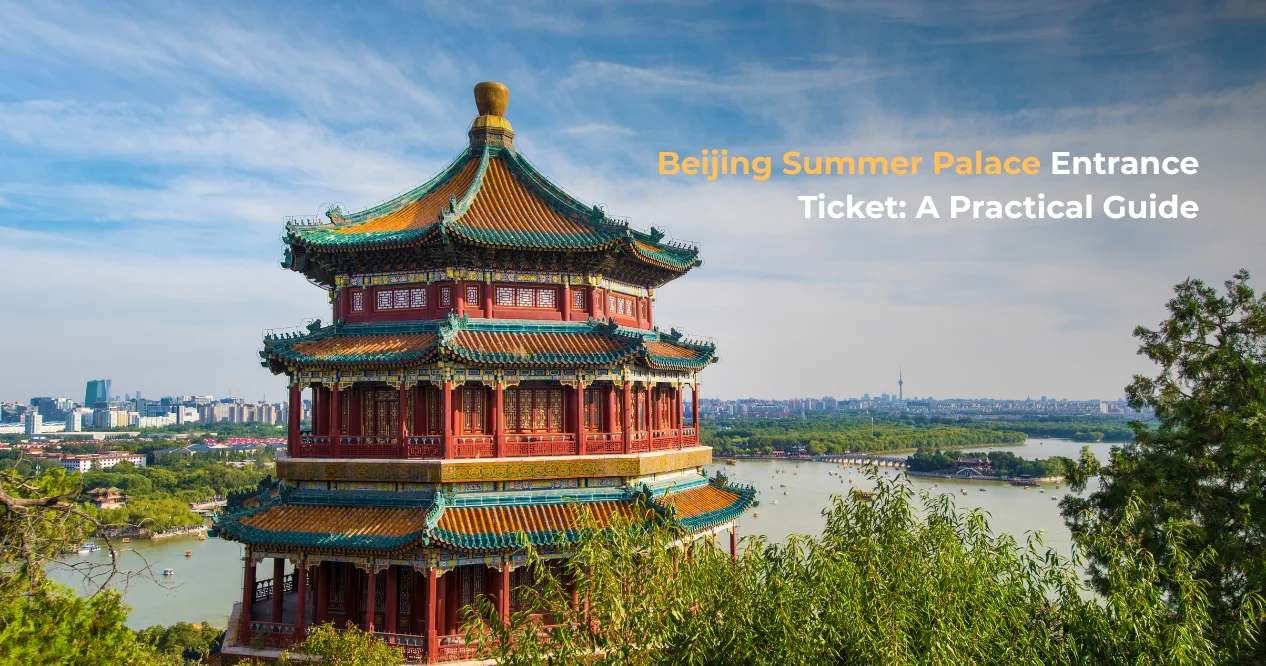
The Beijing Summer Palace is one of China’s most important surviving imperial landscapes: a monumental garden of halls, pavilions, bridges, corridors and water views in Beijing’s Haidian District. Developed as a Qing-dynasty imperial retreat and now a UNESCO World Heritage Site, it is best experienced as a living landscape rather than a quick monument stop. This Beijing Summer Palace Entrance Ticket with Optional Guided Service offers a practical starting point for exploring the palace grounds at your own pace or with added interpretation.
Set around Kunming Lake and Longevity Hill, the Summer Palace rewards unhurried walking. Its scale is part of the appeal. Visitors move between ceremonial architecture, shaded paths, decorative painted beams and broad lake panoramas, with each route revealing a different balance of imperial design and natural scenery.
What Makes the Summer Palace Special
The Summer Palace was created as an imperial garden where architecture was composed with hills and water on an exceptional scale. Kunming Lake occupies much of the site, while Longevity Hill creates the defining vertical backdrop. The result is a place where long corridors, temple buildings and garden paths frame changing views rather than stand alone as isolated sights.
Its most recognisable features include the Long Corridor, admired for its painted decoration; the Tower of Buddhist Incense rising on Longevity Hill; the Marble Boat on the lakeshore; and the Seventeen-Arch Bridge extending toward Nanhu Island. These landmarks are meaningful individually, but the pleasure of a visit lies in connecting them through the gardens.
What Visitors Can Expect
Expect a large, active cultural landscape rather than a compact palace museum. Routes may involve substantial walking, steps and uneven historic surfaces, particularly around Longevity Hill. The lakeside areas can feel open and breezy, while covered corridors and wooded paths provide welcome shade in warmer months.
Many visitors arrive with a short list of famous sights, then find that the transition between them becomes the highlight. Painted ceilings in the Long Corridor, reflections on Kunming Lake and distant views toward Beijing create a more atmospheric experience when there is time to slow down. A guide can be useful for travellers who want historical context, while independent visitors can enjoy a flexible route with a map and a clear sense of priority.
How to Plan Your Visit
Choose the Right Ticket and Guided Option
This product is centred on Summer Palace admission and may offer an optional guided service. Review the booking page carefully before confirming, as inclusions, meeting arrangements, language options, cancellation terms and any access to additional areas can vary by selected option. The official Summer Palace channels remain the best place to confirm current entry rules, opening arrangements and site notices.
Ticket pricing can change by season, booking channel, visitor category and the services included. Rather than relying on an outdated figure, compare the chosen option with current official information and read the inclusions before payment. If a guided service matters to your visit, confirm the meeting point and start time so that you do not lose valuable sightseeing time at the entrance.
Pick a Comfortable Time of Day
Opening schedules can change seasonally, and final entry times may differ from overall operating hours. Check the official website for the latest updates before leaving your accommodation. Early arrival is a sensible strategy because the major corridors, lakeside viewpoints and popular hill routes become busier as the day develops.
Spring brings fresh colour, summer can be hot and humid, autumn often offers clear light and cooler walking weather, and winter creates a quieter, more austere atmosphere. Each season is rewarding, but weather should shape your route. Bring water and sun protection in warm conditions, and allow extra time when paths are wet or icy.
Plan Your Route Around Priorities
A first visit often works best when it begins at a convenient gate, follows the Long Corridor, reaches the principal lakeside landmarks and then includes a measured ascent toward Longevity Hill if mobility and energy allow. Do not attempt every corner of the estate simply for the sake of completion. The Summer Palace is more enjoyable when you choose a few areas and leave room for pauses.
For a practical starting point. Keep your confirmation accessible on your phone, carry identification if required by the booking provider, and arrive with enough time to locate the relevant entrance or guide.
Highlights Worth Prioritising
The Long Corridor
The Long Corridor is a signature Summer Palace experience, combining shelter, lake views and an extraordinary sequence of painted panels. It is particularly useful on bright or rainy days because it offers a more protected way to move through part of the complex. Pause occasionally rather than rushing its full length, as the visual details are easy to overlook in a crowd.
Kunming Lake and the Seventeen-Arch Bridge
Kunming Lake gives the gardens their spaciousness. From the shore, the Seventeen-Arch Bridge is among the strongest visual compositions in the park, especially when its pale stone arches are reflected in calm water. The bridge and nearby island routes can be busy, so patience is often more useful than trying to photograph every view immediately.
Longevity Hill and the Tower of Buddhist Incense
The slope of Longevity Hill provides the classic elevated perspective over the lake and garden roofs. The Tower of Buddhist Incense is the hill’s most prominent architectural focus. Reaching higher viewpoints involves steps, so treat the climb as an optional priority rather than a mandatory part of the visit if anyone in your group has limited mobility.
The Marble Boat
The Marble Boat is a distinctive lakeside landmark with a memorable, almost theatrical silhouette. It makes an easy stop when following the northern shore and is particularly photogenic in soft light. Give yourself time to appreciate the surrounding waterfront as well as the structure itself.
Best Photo Spots at the Summer Palace
The most satisfying photographs usually show the relationship between architecture and landscape. The Long Corridor offers repeating beams, painted details and framed water views. Around Kunming Lake, look toward the Seventeen-Arch Bridge and Nanhu Island for broad compositions that convey the garden’s scale.
From elevated stretches of Longevity Hill, visitors can photograph lake, bridge and distant city views together. The Marble Boat works well as a detail-focused image, while quieter garden paths can produce more intimate photographs than the busiest icons. Respect any posted restrictions, avoid blocking narrow routes and be considerate of visitors who are moving through the same viewpoints.
Transport and Arrival Advice
The Summer Palace is in northwest Beijing, away from the city’s central historic core, so build travel time into your day. Beijing Subway Line 4 is commonly used by visitors, with onward walking and local transport depending on the gate and route selected. Use a current map application and official transport information on the day, since station exits, bus connections and access approaches can affect the easiest arrival plan.
Taxi or ride-hailing travel can be convenient for families, travellers carrying supplies or visitors with limited time, though Beijing traffic can be considerable. Ask your driver to take you to the specific gate you intend to use rather than simply naming the Summer Palace. The site is large enough that arriving at an unsuitable entrance can add substantial walking.
Accessibility and Family Planning
The Summer Palace has broad outdoor spaces and some comparatively level lakeside routes, but it is not uniformly step-free. Historic paving, slopes, bridges, crowds and the climb on Longevity Hill can complicate movement. Visitors using wheelchairs, travelling with strollers or managing reduced mobility should consult official accessibility information, choose a shorter waterside route and allow generous time.
Families can have an excellent visit when the itinerary is paced around children’s energy levels. Bring water, snacks where permitted, sun protection and suitable layers, then plan a break by the lake or beneath the Long Corridor. Keep children close near the water’s edge and avoid building the whole day around a demanding hill climb.
Common Mistakes to Avoid
The most common mistake is underestimating the size of the grounds. A rushed ninety-minute visit may cover a few landmarks but misses the atmosphere that makes the Summer Palace distinctive. Another frequent error is arriving in the hottest part of a summer day without water, shade planning or realistic expectations about walking.
Visitors should also avoid assuming that every ticket includes the same access or services. Read the selected product conditions, confirm whether a guide is included and check current official notices before travel. Finally, do not schedule another fixed-time attraction immediately afterward unless you have chosen a deliberately short route.
Visitor Tips
- Arrive early for more comfortable paths and clearer photographs around the main landmarks.
- Wear supportive footwear because the estate involves long distances, slopes and historic paving.
- Carry water, particularly from late spring through early autumn.
- Check current operating information before departure, including seasonal arrangements and entry guidance.
- Keep your booking confirmation and any required identification easy to access.
- Choose one entrance and one route before arrival to avoid unnecessary backtracking.
- Allow extra time if the Long Corridor, Seventeen-Arch Bridge and Longevity Hill are all priorities.
- Use sun protection in exposed lakeside areas and bring a light layer for changing conditions.
- Respect barriers, posted photography rules and the quieter character of temple areas.
- Build in a rest stop so that the visit remains enjoyable for children and slower walkers.
Nearby Things to Do
- Explore the historic university-area streets and dining options around northwest Beijing after your garden visit.
- Visit the Old Summer Palace, another major imperial garden landscape in Haidian District.
- Continue to Peking University or Tsinghua University surroundings for a different view of Beijing’s cultural northwest.
- Plan an evening meal in a nearby neighbourhood after allowing time for the Summer Palace exit journey.
- Use the Summer Palace as part of a wider Beijing itinerary that also includes the Forbidden City, Temple of Heaven or a Great Wall excursion on separate days.
Travellers building a fuller Beijing programme can make nearby cultural sites easier to organise by considering combined attraction planning. The tripXOXO CITY Pass may be useful for visitors who prefer to group eligible experiences within one broader sightseeing plan, provided its current participating attractions and conditions suit the itinerary.
Conclusion
The Beijing Summer Palace is at its best when approached with time, comfortable shoes and a willingness to wander beyond the headline sights. An entrance ticket with an optional guided service can suit both independent explorers and travellers seeking deeper historical context. Plan the route carefully, check current official details before travel and let the lake-and-hill landscape set the pace of your visit.
Location: Summer Palace, Haidian District, northwest Beijing, China
Recommended duration: Allow around three to five hours for the principal gardens, lakeside routes and major landmarks.
Best time to visit: Spring and autumn are especially comfortable, while early mornings and weekdays generally feel calmer.
Getting there: The Summer Palace is served by public transport in northwest Beijing; Beijing Subway Line 4 is a commonly used approach for visitors.
Accessibility: Some routes are more manageable than others, but hills, bridges, historic surfaces and long walking distances can present challenges.
Family friendliness: The grounds are suitable for families who plan breaks, use a stroller-friendly route where possible and supervise children near water.
Frequently Asked Questions:
Q) How can I combine the Summer Palace with other Beijing attractions?
A) The Summer Palace works well within a wider northwest Beijing sightseeing day, although its scale deserves several unhurried hours. The tripXOXO CITY Pass can help travellers review eligible experiences alongside their Summer Palace plans. Check current pass inclusions carefully, then avoid pairing too many fixed-time visits on the same day.
Q) Should I climb Longevity Hill during my visit?
A) Longevity Hill offers rewarding views over Kunming Lake and the wider garden, but the climb involves steps and effort. It is best for visitors with sufficient time and comfortable footwear. Skip or shorten the ascent if heat, rain, mobility needs or family pacing make it unsuitable.
Q) Can an attraction pass help save money on a Beijing sightseeing trip?
A) An attraction pass can offer value when its included sights genuinely match the places you intend to visit. The tripXOXO CITY Pass is worth considering for travellers planning several eligible experiences during one Beijing stay. Compare its current price and terms with individual tickets before deciding, since value depends on your schedule.
Q) How should I plan multiple experiences around the Summer Palace?
A) Start by protecting enough time for the Summer Palace, then add nearby or compatible experiences around it. The tripXOXO CITY Pass can support a broader plan when its active attraction list fits your interests. Keep one period of the day flexible, as weather and walking pace can change an ambitious itinerary.
Q) Do I need to reserve a Summer Palace ticket in advance?
A) Advance booking is a sensible choice for popular travel periods and for visitors using a timed guided service. Entry arrangements can change according to seasonal demand and operational requirements. Review the selected booking conditions and check the official Summer Palace website for the latest updates before your visit.
Q) What does the optional guided service add to a Summer Palace visit?
A) A guided service can add historical context to buildings, imperial design and the landscape around Kunming Lake. It may also make route planning simpler in such a large complex. Confirm the guide language, meeting location, start time and inclusions before booking, as these details depend on the selected option.
Q) What is the best time of day to visit the Summer Palace?
A) Morning is often the most comfortable time to arrive, especially during busier seasons. Earlier light can be pleasant for photographs, and the main routes may feel less congested. Always verify current opening arrangements before travelling, because seasonal schedules and last-entry policies can change.
Q) Which season is best for visiting the Summer Palace?
A) Spring and autumn are popular because temperatures are often more comfortable for long outdoor walks. Summer offers lush scenery but can feel hot, humid and crowded, while winter may be quieter and colder. The best season depends on your tolerance for weather, walking and visitor numbers.
Q) Can I see the major Summer Palace highlights in two hours?
A) Two hours can cover a limited route, particularly if you focus on the Long Corridor and nearby lake views. It will not allow a relaxed exploration of the wider garden complex. Choose an entrance close to your priorities and avoid adding a strenuous Longevity Hill climb unless time is flexible.
Q) How do I reach the Summer Palace by public transport?
A) Beijing Subway Line 4 is a common public-transport option for reaching the Summer Palace area. The best station exit and final walking route depend on the gate you plan to use. Check a current map and Beijing transport information on the day, particularly if travelling with children or reduced mobility.
Q) Is taking a taxi to the Summer Palace convenient?
A) A taxi or ride-hailing car can be convenient when travelling as a family or carrying supplies for a full day outdoors. Beijing traffic can be slow at peak periods, so allow extra time. Give the driver the name of your intended gate, as the complex has multiple approaches.
Q) What are the biggest mistakes to avoid at the Summer Palace?
A) The biggest mistake is underestimating how much walking the Summer Palace requires. Another is assuming every ticket or guided option includes identical services and access. Check your booking details, arrive prepared for weather and avoid scheduling another inflexible activity immediately after the visit.
Q) Is the Summer Palace suitable for wheelchair users?
A) Some areas may be more navigable than others, but the historic landscape includes slopes, uneven surfaces and bridges. Wheelchair users should prioritise lower, lakeside routes and seek current accessibility guidance from official channels. Travelling with a companion can make route adjustments and crowded sections easier to manage.
Q) Can I bring a stroller to the Summer Palace?
A) A stroller can be useful for young children on wider, flatter paths around the lake and corridor areas. It may be difficult on stairs, steep sections and uneven historic surfaces. Choose a compact stroller where possible, and avoid planning a route that depends on climbing Longevity Hill.
Q) Is the Beijing Summer Palace good for families?
A) The Summer Palace can be rewarding for families because it combines open space, water views and memorable architecture. Younger visitors may tire during long walks, particularly in warm weather. Plan regular breaks, carry drinks and choose a manageable route instead of trying to cover the entire estate.
Q) Are photos allowed inside the Summer Palace?
A) Photography is generally part of the experience in outdoor garden areas, where landscapes and architecture are major draws. Restrictions may apply in particular interiors or around special displays. Follow posted signs, respect staff guidance and avoid obstructing narrow paths while composing photographs.
Q) Where are the best places to take photos at the Summer Palace?
A) The Long Corridor, Kunming Lake shoreline and Seventeen-Arch Bridge are among the most rewarding places for photographs. Higher viewpoints on Longevity Hill can reveal the garden’s overall scale. Visit early when possible, and be patient at popular viewpoints rather than crowding other visitors.
Q) What should I check before leaving for the Summer Palace?
A) Before leaving, confirm your ticket details, intended gate, current opening information and the day’s weather. Save your booking confirmation offline in case mobile service is inconvenient. Wear suitable shoes, carry water and allow extra time for transport through northwest Beijing.
Q) What should I bring to the Summer Palace?
A) Bring water, comfortable footwear, weather protection and a charged phone with your booking details available. A small day bag is usually more practical than bulky luggage on crowded paths. Check current official visitor guidance before arrival for any rules affecting bags, food or other items.
Q) Is there food available near the Summer Palace?
A) Food options can vary by area, season and venue operations, so it is wise not to depend on a specific outlet without checking first. Many visitors eat before arriving or plan a meal after the visit. Carry water and a suitable snack if permitted, especially when travelling with children.
Q) What happens if it rains during my Summer Palace visit?
A) Rain changes the character of the gardens but does not necessarily end the experience. The Long Corridor offers some shelter, while exposed lakeside and hill routes become less comfortable. Wear waterproof footwear where possible, bring rain protection and check operational notices if weather is severe.
Q) Is summer weather difficult at the Summer Palace?
A) Summer can be hot and humid, with strong sun on open lakeside sections. An early start, frequent water breaks and shaded pauses in the Long Corridor can make the visit more comfortable. Do not underestimate the walking distance, especially when travelling with children or older relatives.
Q) Can I visit the Summer Palace and the Forbidden City in one day?
A) It is possible, but it can feel rushed because both sites are large and are separated by city travel. Visitors who want to appreciate the Summer Palace landscape should consider giving it a dedicated half day. If combining them, reserve tickets carefully and keep transport time generous.
Q) What nearby attraction pairs best with the Summer Palace?
A) The Old Summer Palace is a natural companion for travellers interested in Beijing’s imperial garden history. It is still best treated as a separate visit rather than a quick add-on after a long Summer Palace route. Check transport, ticketing and opening details for each attraction independently.