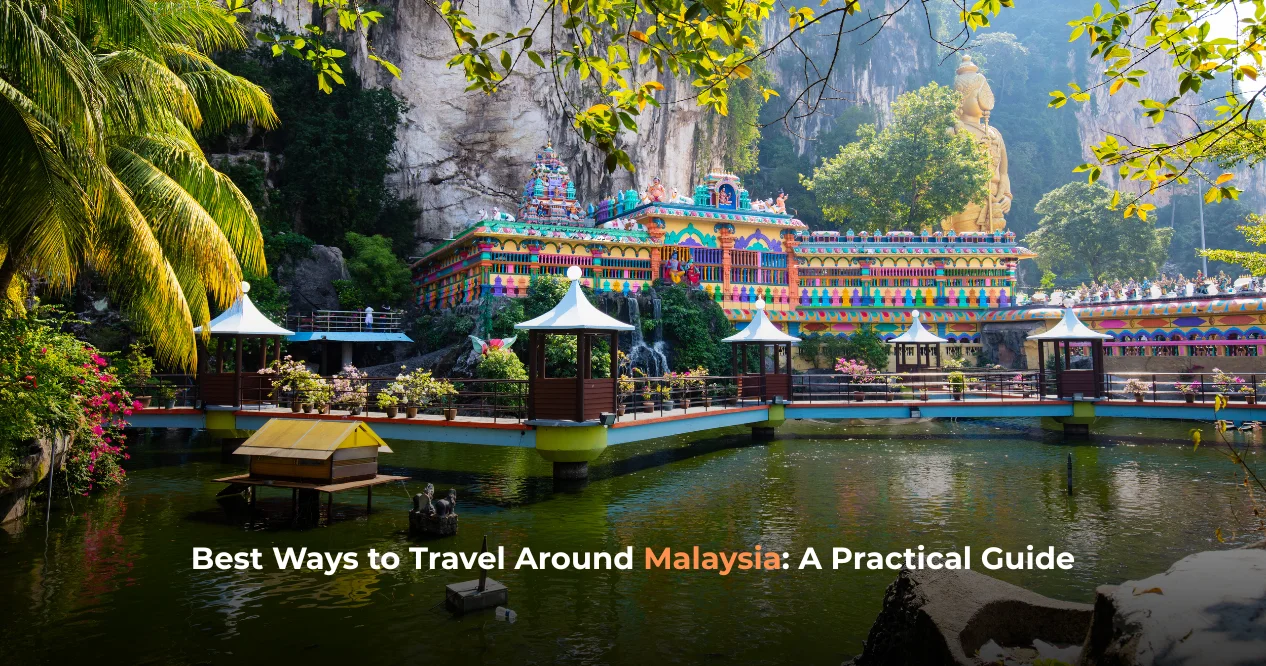
Malaysia makes getting around part of the adventure. One morning you can glide past Kuala Lumpur skyscrapers on an urban train, spend the afternoon rolling toward heritage-filled Ipoh, then switch to a ferry for a tropical island escape. With modern rail, affordable buses, low-cost flights and handy local transport, exploring the country is surprisingly straightforward.
Ride the Rails Through Kuala Lumpur and Peninsular Malaysia
Kuala Lumpur is one of the easiest places to begin. The Klang Valley's integrated network includes MRT, LRT, Monorail and KTM Komuter services, connecting major neighbourhoods and attractions while helping you dodge the city's notorious road traffic.
For sightseeing, combine rail journeys with walks around areas such as Chinatown, Bukit Bintang and Kampung Baru. The latter is a particularly rewarding stop for traditional Malay food and striking views contrasting village-style streets with Kuala Lumpur's futuristic skyline.
Travel Tip: For a short Kuala Lumpur stay, use contactless or locally available transit payment options where accepted, but check the latest operator rules before travelling because ticketing and payment methods vary between services.
For longer journeys, KTM's ETS trains are a comfortable way to travel along the west coast of Peninsular Malaysia. Popular stops include Ipoh, where limestone hills frame a compact old town, and Butterworth, the mainland gateway for onward travel to George Town on Penang.
Malaysia's rail options have continued to evolve, so check current KTM schedules before building a multi-city itinerary. Advance booking is particularly sensible around weekends, school holidays and major Malaysian festivals.
Take the Bus for Cheap, Flexible Adventures
Long-distance buses remain one of Malaysia's best-value transport choices. Extensive routes link Kuala Lumpur with destinations including Melaka, the Cameron Highlands, Penang and east-coast towns, often reaching places that are less convenient by train.
Heading to Melaka? Once you arrive, explore the UNESCO-listed historic centre on foot, wander beyond busy Jonker Street and sample local Nyonya cooking. In the Cameron Highlands, buses can deliver you to cool mountain country where tea plantations, forest trails and strawberry farms replace tropical city heat.
Travel Tip: Build extra time into bus journeys, especially around Kuala Lumpur and during holiday periods. Heavy traffic can make road travel significantly slower than the timetable suggests.
For a more local experience, use town buses where practical rather than relying entirely on taxis. Services can be less frequent outside major cities, but they offer an inexpensive glimpse of everyday Malaysian life.
Fly Between Peninsular Malaysia, Sabah and Sarawak
Malaysia is split by the South China Sea, so flying is usually the most practical way to combine Peninsular Malaysia with Malaysian Borneo. Frequent domestic services connect Kuala Lumpur with cities including Kota Kinabalu and Kuching, while regional flights open up more of Sabah and Sarawak.
Kota Kinabalu is a springboard for Sabah's beaches, islands and Mount Kinabalu region. Kuching delivers a different flavour: stroll its waterfront, explore its food scene and use the city as a base for Sarawak's national parks and wildlife experiences.
Travel Tip: When comparing domestic flights, check the total fare rather than the headline price. Checked baggage, seat selection and airport transfers can change the final cost considerably.
Adventurous travellers heading deeper into Borneo should expect transport to become part of the experience. Depending on the destination, onward travel may involve vans, buses, small aircraft or boats, so leave some flexibility between connections.
Catch Ferries and Boats to Malaysia's Island Escapes
Some of Malaysia's most memorable journeys happen on the water. Ferries and speedboats provide access to island destinations, but departure points and operating seasons vary considerably.
From Penang's mainland side, the ferry crossing between Butterworth and George Town provides an enjoyable alternative to reaching the island by road. Once in George Town, walking is the best way to discover street art, clan houses, kopitiams and atmospheric lanes tucked between grand heritage buildings.
For tropical escapes, boats serve destinations such as the Perhentian Islands and Tioman from their respective mainland gateways. These journeys lead to snorkelling, diving, jungle-backed beaches and relaxed evenings far removed from Malaysia's cities.
Travel Tip: East-coast island travel is heavily influenced by monsoon conditions. Some resorts, boat services and activities reduce or suspend operations during the rougher northeast monsoon period, so verify seasonal schedules before booking.
Use Ride-Hailing, Walking and Car Hire for Local Discovery
Once you reach your destination, ride-hailing can be an easy option for short journeys in larger cities and tourist areas. It is especially useful for places poorly served by rail, carrying luggage to a station or reaching food spots outside the central tourist districts.
Walking works brilliantly in compact heritage districts such as central George Town and Melaka, where slowing down reveals temple courtyards, independent cafés, markets and street-food stalls you might otherwise miss.
A rental car offers more freedom for rural itineraries, scenic drives and smaller towns. Peninsular Malaysia has an extensive road network, but remember that Malaysians drive on the left. Parking and congestion can also make a car inconvenient in central Kuala Lumpur.
Travel Tip: Mix transport modes instead of choosing just one. Rail for major corridors, buses for broader coverage, flights for Borneo, boats for islands and ride-hailing or walking locally can create a faster and more interesting itinerary.
Plan Your Malaysian Journey
The best way to travel around Malaysia depends on where the day takes you. Use trains when speed and comfort matter, buses when flexibility and value win, domestic flights for major cross-country leaps and boats when an island is calling.
Before departure, check live operator schedules, weather conditions and holiday-period availability, especially for trains, buses and ferries. Then leave enough breathing room to follow a food recommendation, explore an unexpected neighbourhood or stay another night somewhere you love.
Ready to go? Map out your Malaysian route, reserve time-sensitive transport early and start building a journey that combines big-city energy, heritage towns, rainforests and tropical shores. [add booking link]
Frequently Asked Questions
1. What is the best way to travel around Malaysia?
A combination works best: use trains and buses across Peninsular Malaysia, flights for reaching Sabah and Sarawak, and ferries or boats for suitable island destinations.
2. Are trains useful for tourists in Malaysia?
Yes. Kuala Lumpur has extensive urban rail, while KTM services provide useful connections along major corridors in Peninsular Malaysia.
3. Are long-distance buses a good option in Malaysia?
Yes. They are generally affordable and connect many popular destinations, including places that are less convenient to reach by train.
4. Should I fly from Kuala Lumpur to Malaysian Borneo?
Flying is generally the most practical option because Sabah and Sarawak are separated from Peninsular Malaysia by the South China Sea.
5. Can I travel around Kuala Lumpur without renting a car?
Absolutely. MRT, LRT, Monorail, KTM Komuter, walking and ride-hailing can cover most visitor journeys without the hassle of driving and parking.
6. When should I book Malaysian transport in advance?
Book earlier for weekends, school holidays and major festivals, particularly when using popular intercity trains, buses or time-sensitive connections.
7. Do Malaysia's island ferries operate all year?
Not always. Weather and monsoon conditions can affect east-coast boat schedules, resort operations and activities, so confirm services before travelling.
8. Is renting a car worthwhile in Malaysia?
It can be excellent for rural areas, scenic routes and smaller towns, but public transport and ride-hailing are often more convenient in central Kuala Lumpur.