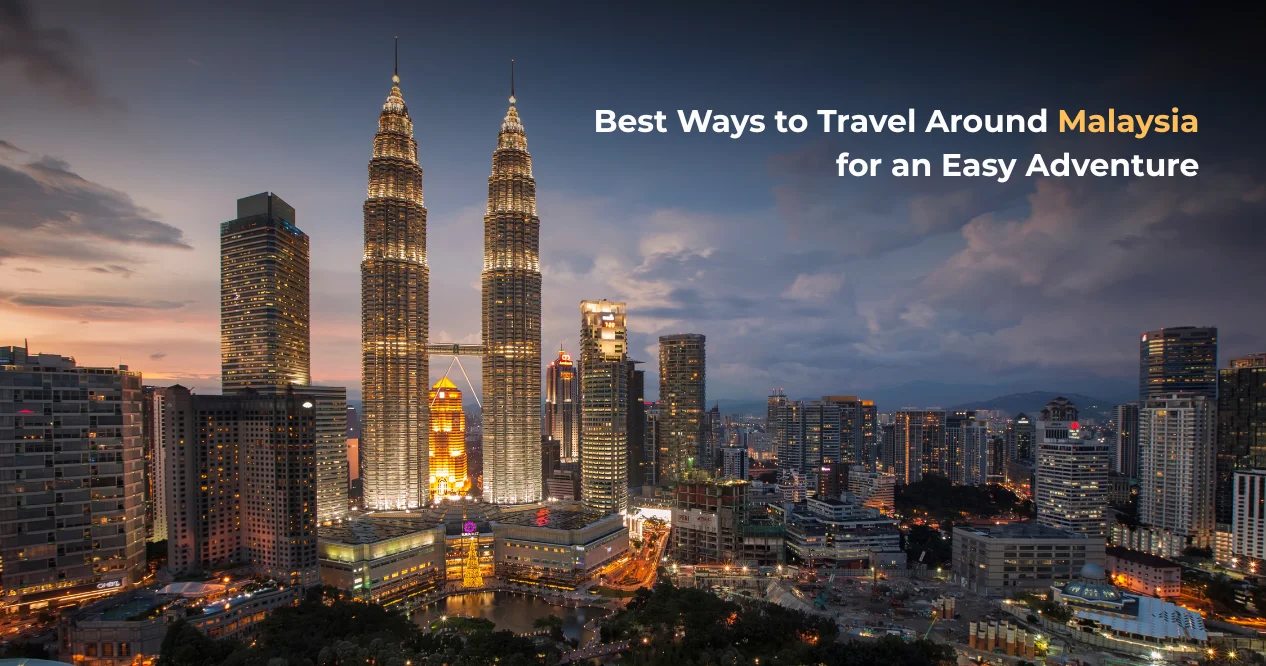
Malaysia rewards travellers who keep moving. One morning you can be eating roti canai beneath Kuala Lumpur's skyscrapers, the next wandering George Town's heritage streets, cruising toward a tropical island or climbing into the cool tea country of the Cameron Highlands. Better still, getting between these experiences can be surprisingly straightforward.
The secret is knowing which transport fits each leg. Malaysia combines modern railways and inexpensive urban transit with long-distance coaches, ferries and app-based rides, so you rarely need to rely on just one way of getting around.
Ride the Rails for Comfortable City-to-City Travel
Trains are one of the most relaxing ways to explore Peninsular Malaysia. KTM's ETS services connect Kuala Lumpur with destinations along the west-coast corridor, including Ipoh, Butterworth for Penang and Padang Besar near the Thai border. For travellers heading south, rail services also connect toward Johor, with journey options changing as Malaysia's rail network develops.
Ipoh makes an especially tempting stop. Step off for white coffee, cave temples and a stroll through atmospheric old-town lanes before continuing your journey.
Travel Tip: Reserve popular intercity trains ahead for weekends, school holidays and major festivals. Check the latest KTM timetable before planning connections because schedules and operating patterns can change.
Rail fans looking for something slower can investigate Malaysia's classic east-coast railway journeys through Kelantan and Pahang. They trade speed for rural scenery and a fascinating look beyond the country's better-known tourism corridor.
Use Buses to Reach Highlands, Heritage Towns and Hidden Gems
Malaysia's long-distance bus network fills many of the gaps left by rail. Modern coaches connect Kuala Lumpur with places such as Melaka, the Cameron Highlands, Kuantan and numerous smaller towns, often at wallet-friendly fares.
The Cameron Highlands are a great example. Buses remove the need to tackle winding mountain roads yourself, leaving you free to concentrate on tea plantations, mossy forests and cooler highland air.
Melaka is another easy bus adventure. Spend your time exploring the historic centre, sampling Nyonya flavours and walking beside the Melaka River rather than worrying about parking.
Travel Tip: Kuala Lumpur has several transport hubs, so double-check the exact departure terminal printed on your ticket. Arrive early and allow extra time around public holidays when roads and stations can become especially busy.
Master Kuala Lumpur With Trains, Buses and App-Based Rides
Kuala Lumpur is far easier to navigate when you mix transport modes. MRT, LRT, Monorail and commuter rail services cover much of the metropolitan area, while buses and app-based ride services are useful for the final stretch.
A handy local option is Rapid KL's rail and bus network, which links numerous sightseeing districts and neighbourhoods. Travellers should check current fare products and accepted payment methods before setting out, as ticketing arrangements can evolve.
Use the network to hop between central sights, then take a short ride-hailing trip for places that are awkward by rail. Grab is widely used in Malaysia, though prices and waiting times rise when demand is high.
Travel Tip: Avoid making every journey by car in central Kuala Lumpur. Rail can be quicker during rush hour, while short walks reveal food courts, street stalls and neighbourhood details you would otherwise miss.
Take Ferries and Local Transport for Island Adventures
Malaysia's islands are where the journey becomes part of the holiday. Langkawi is accessible by air and ferry services from selected mainland ports, while travellers bound for the Perhentian Islands typically travel overland to Kuala Besut before taking a boat to the islands.
On smaller islands, expect a completely different rhythm. Boats, walking and local transfers may replace the urban transport options you used in Kuala Lumpur. That slower pace is part of the appeal: think snorkelling, quiet beaches and seafood dinners rather than train timetables.
Travel Tip: Never assume an island boat runs on your preferred date. Ferry schedules can vary with destination, season, weather and sea conditions, especially around the northeast monsoon. Confirm departures shortly before travelling and leave buffer time before flights.
Rent a Car When Freedom Matters Most
You do not need a rental car for a classic Kuala Lumpur, Penang and Melaka itinerary, but driving can unlock quieter corners of Peninsular Malaysia. It is particularly useful when your plans involve rural food stops, nature areas or several places poorly connected by public transport.
Malaysia drives on the left, and major highways are generally straightforward to navigate. Tolls are common on expressways, however, so ask your rental company about the current payment method and make sure you are properly equipped before joining a toll road.
For Malaysian Borneo, think regionally rather than trying to force one transport method onto the whole trip. Sabah and Sarawak cover enormous areas. Flights are often practical between major centres, while buses, hired transfers and boats become useful for particular parks, villages and river areas.
Travel Tip: Build your itinerary around geography. Use trains and coaches across Peninsular Malaysia, flights for major jumps to or within Malaysian Borneo, and local transport for the final leg. You will spend more time exploring and less time backtracking.
Malaysia is at its best when the journey has variety: glide north by train, climb into the highlands by coach, ride a boat toward an island and let local transit carry you through the cities. Check current schedules, book high-demand legs early and leave a little room for spontaneous food stops and hidden gems. Then choose your first destination and start mapping your Malaysian adventure.
Frequently Asked Questions
1. What is the best way to travel around Malaysia?
A combination works best. Use trains and coaches for Peninsular Malaysia, urban rail in Kuala Lumpur, ferries for relevant islands and flights for longer journeys to or within Malaysian Borneo.
2. Are trains useful for travelling around Peninsular Malaysia?
Yes. KTM rail services are particularly useful along the west-coast corridor, including journeys connecting Kuala Lumpur with Ipoh, Butterworth and Padang Besar.
3. Is a rental car necessary in Malaysia?
No. Many popular destinations can be reached without driving. A car becomes more useful when exploring rural areas or combining places with limited public transport.
4. How should I get around Kuala Lumpur?
Combine MRT, LRT, Monorail, commuter trains and buses with walking or app-based rides for the final part of a journey.
5. Can I travel to the Cameron Highlands without a car?
Yes. Long-distance buses are a convenient option and save visitors from driving the highlands' winding roads.
6. Should I book Malaysian transport in advance?
Booking ahead is sensible for popular intercity trains and busy travel periods. Island transfers also deserve advance checking because schedules can be seasonal or weather-dependent.
7. How do I reach Malaysia's islands?
It depends on the island. Langkawi has air and ferry options, while the Perhentian Islands are commonly reached by boat from Kuala Besut.
8. What is the most practical way to explore Malaysian Borneo?
Flights are useful for covering major distances across Sabah and Sarawak, supplemented by buses, private transfers or boats for specific local destinations.