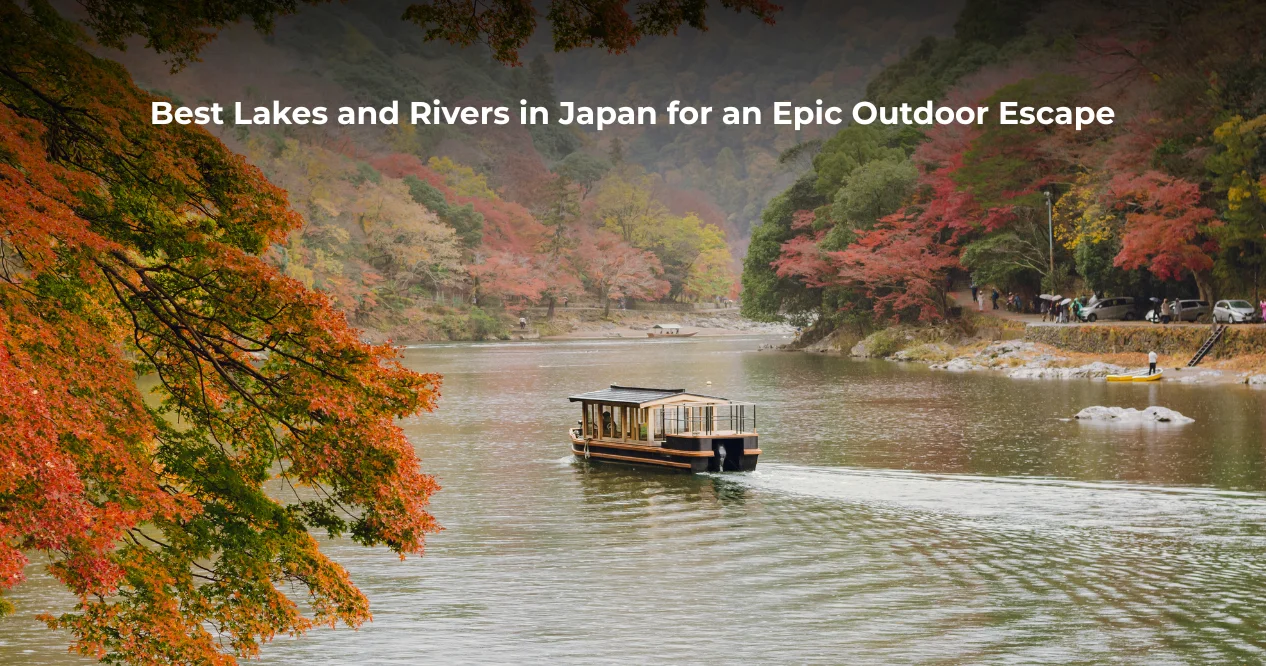
Japan looks completely different from the water. Beyond neon cities and famous temples, you can paddle through Hokkaido wetlands, cycle beside Mount Fuji, drift beneath Kyoto’s forested hills and hike through ravines where the water glows turquoise. These lakes and rivers combine big scenery with distinctly Japanese experiences, making them rewarding additions to almost any itinerary.
Lake Kawaguchi: Mount Fuji From the Water
Lake Kawaguchi, one of the Fuji Five Lakes in Yamanashi Prefecture, delivers the classic combination of blue water and Mount Fuji. On clear mornings, the mountain can reflect across the lake, while spring cherry blossoms and autumn foliage add another layer of colour.
Walk or cycle sections of the shoreline, take a sightseeing cruise, visit lakeside museums and parks, or settle into an onsen stay with Fuji views. For a quieter outing, head away from the busiest areas around Kawaguchiko Station and explore the northern shore.
Travel Tip: Fuji is often clearest early in the morning, particularly outside humid summer weather. Stay overnight near the lake so you can get outside before day-trip crowds arrive.
Lake Shikotsu and Lake Akan: Wild Hokkaido
Hokkaido rewards travellers who want clear water, volcanic landscapes and considerably more breathing room. Lake Shikotsu, within Shikotsu-Toya National Park, is a deep caldera lake renowned for remarkably transparent water. Canoeing, kayaking, lakeside walks and nearby hot springs make it an easy nature escape from Sapporo or New Chitose Airport.
Farther east, Lake Akan sits within Akan-Mashu National Park. It is famous for marimo, rare spherical colonies of algae that have become a symbol of the area. Cruises reveal the forested volcanic setting, while Akanko Onsen provides a comfortable base.
A visit to the lakeside Ainu community also offers opportunities to encounter Ainu culture through traditional crafts, performances and local storytelling. Approach these experiences as living culture rather than simply sightseeing attractions.
Travel Tip: Hokkaido lake conditions change dramatically with the seasons. Confirm cruise, paddling and transport schedules shortly before travelling, especially in spring, autumn and winter.
Shimanto River: Slow Adventure in Shikoku
For rural Japan at its most soothing, follow the Shimanto River through Kochi Prefecture on Shikoku. The river is celebrated for its relatively undeveloped landscape, forested valleys and distinctive chinkabashi bridges: low crossings built without railings so floodwater can pass over them.
Canoeing and kayaking are standout experiences when conditions permit. Cycling is another excellent way to explore, giving you time to stop beside quiet bends, watch local fishing activity and discover small settlements that hurried travellers often miss.
The Shimanto area is also known for river foods, including sweetfish and eel, although availability varies by season. Combining outdoor exploration with a local meal makes the journey feel rooted in the landscape rather than like another checklist stop.
Travel Tip: Do not enter or paddle the river based on appearance alone. Rainfall can quickly alter currents and water levels, so use reputable local operators and follow current safety guidance.
Hozu River: Kyoto Beyond the Temples
Kyoto has a wilder side. The Hozu River winds through a steep, forested gorge between Kameoka and Arashiyama, offering a dramatic contrast to the city's shrines and historic streets.
Traditional sightseeing boat trips through the gorge are the signature experience, with skilled boatmen navigating stretches of moving water before the journey reaches Arashiyama. The surrounding hills are especially striking during fresh spring greenery and autumn colour.
For a memorable day, pair the river with the scenic rail journey through the gorge, subject to current operating schedules. Once in Arashiyama, wander beyond its busiest central streets to find quieter riverside scenery.
Travel Tip: Boat services may be changed or cancelled because of weather and river conditions. Reserve ahead during peak foliage periods and check same-day operating information before departing Kyoto.
Takachiho Gorge: Kyushu's Volcanic River Wonderland
Few Japanese waterways look as theatrical as Takachiho Gorge in Miyazaki Prefecture. The Gokase River cuts between towering volcanic rock walls, while Manai Falls drops directly into the gorge, creating one of Kyushu's most recognisable landscapes.
Rowboats offer the famous water-level perspective when operations and conditions allow. There is also a walking route along the gorge, so the area remains rewarding even if boating is unavailable. Arrive early for a calmer atmosphere and cooler temperatures.
Takachiho is also closely associated with Japanese mythology and performing traditions. Spending a night in the town gives you more time to explore its shrines and cultural attractions after day-trippers leave.
Travel Tip: Boat availability can be affected by high water, weather and maintenance. Reservations can be valuable at busy times, so check current local information before building your day around a boat ride.
Plan Your Japanese Water Adventure
Choose Lake Kawaguchi for iconic Fuji scenery, Hokkaido for volcanic wilderness, the Shimanto River for slow rural adventure, the Hozu River for an easy Kyoto escape, or Takachiho Gorge for some of Kyushu's most dramatic geology. Spring and autumn often bring comfortable exploring weather, while summer opens up more paddling possibilities in many regions.
Weather, floods, snow and seasonal timetables can affect boats and other water activities anywhere in Japan. Check official local conditions shortly before setting out, allow some flexibility and never bypass closures or safety restrictions.
Ready to go? Pick one waterway that fits your route, give it at least half a day, and leave room for the unexpected riverside café, hot spring or quiet viewpoint. Japan's best water adventures reward travellers who slow down.
Frequently Asked Questions
1. Which Japanese lake is best for views of Mount Fuji?
Lake Kawaguchi is an excellent choice, combining accessible shoreline viewpoints with classic Mount Fuji scenery. Early morning generally offers the best chance of clear views.
2. Where can I experience exceptionally clear lake water in Japan?
Lake Shikotsu in Hokkaido is particularly renowned for its clear water and offers canoeing, kayaking and lakeside scenery.
3. Where can travellers see marimo in Japan?
Lake Akan in eastern Hokkaido is famous for marimo, distinctive spherical colonies of algae protected as part of the area's natural heritage.
4. Which river is good for a slower rural adventure?
The Shimanto River in Kochi Prefecture is ideal for cycling, paddling and exploring forested countryside dotted with characteristic low-water bridges.
5. Can I take a river trip near Kyoto?
Yes. The Hozu River gorge between Kameoka and Arashiyama is known for traditional sightseeing boat trips, depending on weather and operating conditions.
6. Is Takachiho Gorge worth visiting without a boat reservation?
Yes. The gorge's walking route provides impressive views of its volcanic cliffs, river and Manai Falls even when rowboats are unavailable.
7. What are good seasons for exploring Japan's lakes and rivers?
Spring and autumn typically offer pleasant temperatures and beautiful seasonal scenery. Summer can suit paddling, although rainfall and changing river conditions require extra attention.
8. What safety checks should I make before water activities in Japan?
Check current weather, water levels, closures and operator notices. Conditions can change quickly after heavy rain, so always follow local instructions and activity restrictions.