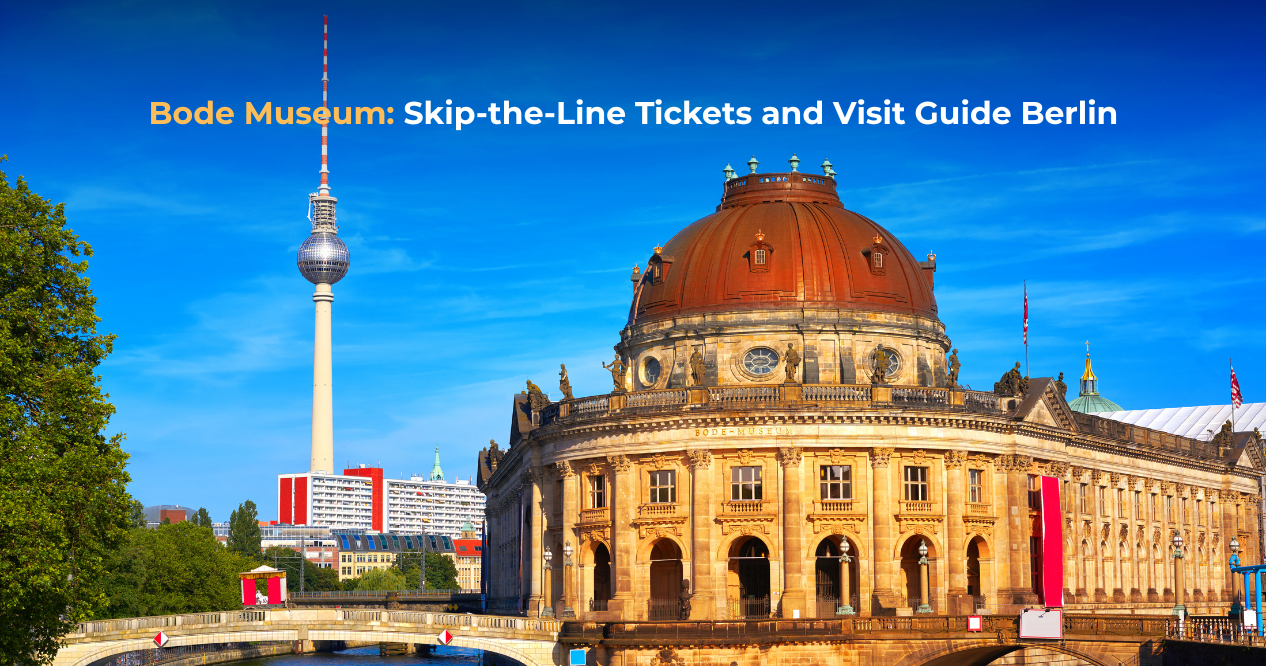
At the northern tip of Berlin’s Museum Island, the Bode Museum brings together Byzantine art, European sculpture, medals and coins in one of the city’s most distinctive historic museum buildings. Its riverside setting, grand domed entrance and richly decorated interiors make the journey worthwhile before visitors even reach the galleries.
A Bode Museum skip-the-line experience can make arrival more convenient, particularly during busy periods. The exact benefit depends on the product selected, so visitors should confirm whether it includes an entry reservation, a timed admission, a direct entrance or another arrangement. Check the official website for the latest updates before travelling.
What the Bode Museum Is
The Bode Museum is operated by the Staatliche Museen zu Berlin and forms part of Berlin’s Museum Island UNESCO World Heritage setting. The building was designed as a monumental museum and opened in the early twentieth century. Its collections span religious art, sculpture, architectural elements and numismatics across several centuries and regions.
The museum is especially associated with early Christian and Byzantine works, Italian and German sculpture, and the Münzkabinett, one of the world’s major collections of coins, medals and monetary objects. The experience is as much about moving through an architectural landmark as it is about viewing individual masterpieces.
Main Highlights
Byzantine art
The Byzantine collection offers a valuable introduction to art shaped by the eastern Roman and medieval Christian worlds. Icons, decorative objects and religious works reveal how materials, symbolism and artistic traditions travelled across Europe and the Mediterranean.
European sculpture
Sculpture is one of the museum’s strongest attractions. Visitors can encounter works connected with Italian Renaissance traditions, German late medieval art and later European developments. The galleries reward close observation because surface detail, gestures and carved decoration often carry as much interest as the overall composition.
The Numismatic Collection
The Münzkabinett adds a different rhythm to the visit. Coins and medals may be small, but they provide a wide historical record through portraits, inscriptions, political messages and changing techniques. Visitors who enjoy history, design or collecting should leave enough time for more than a quick pass through this section.
The building and cupola
The Bode Museum’s architecture is a major highlight in its own right. Look for the central entrance sequence, ornate interiors, monumental stairways and views towards the River Spree. The combination of sculpture galleries and architectural detail creates a particularly atmospheric museum visit.
What Visitors Can Expect
Expect a substantial indoor cultural attraction rather than a brief photo stop. The collections are spread through a historic building, and the best experience comes from choosing a few themes instead of trying to absorb every object. Exhibition layouts, gallery access and temporary displays can change.
Skip-the-line admission does not necessarily mean that every visitor can bypass every checkpoint. Security, ticket validation, timed reservations, cloakroom procedures or capacity controls may still apply. Read the conditions attached to the selected product and arrive with the required confirmation ready to show.
How to Plan Your Visit
Start by checking the official Bode Museum page for opening hours, closures, exhibition information and admission rules. Compare the selected skip-the-line product with the museum’s own requirements, especially if the booking is for a particular date or entry window. Current pricing and availability can change, so Check the official website for the latest updates.
Allow two to three hours for a well-paced first visit. Art enthusiasts, visitors studying the Numismatic Collection and anyone combining the museum with a temporary exhibition may prefer longer. A shorter visit is possible when focused on the building, the main sculpture galleries and a small number of priority works.
Plan the route around Museum Island rather than treating the Bode Museum as an isolated stop. The area can be busy with sightseeing groups, school visits and photography activity. Arriving earlier may provide a calmer start, while weekday visits can sometimes feel less pressured than popular weekend periods.
Tickets, Timing and Pricing Guidance
Prices depend on the ticket type, visitor category, date, exhibition access and whether the booking is a museum ticket, a timed reservation or a third-party skip-the-line product. The phrase skip the line should be read alongside the product inclusions because it may describe a faster admission process rather than unrestricted priority access in every circumstance.
Some products may require visitors to exchange a voucher, follow a designated entry procedure or arrive within a stated validity period. Others may be subject to availability or separate rules for special exhibitions. Do not rely on an old price or opening time copied from another website; use the official museum and booking pages for the current details.
Opening hours can vary because of public holidays, event schedules, maintenance and exhibition changes. Confirm the hours shortly before the visit and leave enough time for transport delays. A ticket does not automatically guarantee access to every gallery if a room is closed or a separate exhibition rule applies.
Best Photo Spots
The approach from the Museum Island side gives the clearest sense of the museum’s grand façade and domed silhouette. Riverside viewpoints can frame the building with the Spree, while the open space around Museum Island offers changing perspectives as the light moves across the stonework.
Inside, architectural details around the entrance, staircases and central spaces are often more rewarding than hurried gallery snapshots. Photographing works of art depends on museum rules, flash restrictions and any exhibition-specific policy. Follow staff instructions and avoid blocking circulation routes.
Common Mistakes to Avoid
- Assuming every skip-the-line ticket has identical entry benefits.
- Arriving without checking whether a voucher must be exchanged or scanned.
- Planning too many Museum Island museums for one rushed afternoon.
- Ignoring current opening hours, holiday changes or temporary closures.
- Expecting every gallery to be accessible when building access can vary by area.
- Using flash or tripods without confirming the photography rules.
- Leaving the Numismatic Collection until the final few minutes.
- Forgetting that central Berlin can be busy during major events and weekends.
Visitor Tips
- Keep the booking confirmation accessible on your phone.
- Check the official museum page before leaving for the attraction.
- Allow extra time for transport and admission procedures.
- Wear comfortable shoes for the historic building and nearby walking routes.
- Choose two or three collection priorities before entering.
- Ask staff about current exhibition access and gallery closures.
- Use quiet observation rather than trying to photograph every object.
- Confirm accessibility arrangements in advance if required.
- Build in a short break when visiting with children.
- Respect photography, bag storage and visitor conduct rules.
Transport and Arrival Advice
The Bode Museum stands on Museum Island in central Berlin, within walking distance of major city landmarks and transport connections. Visitors can approach from Alexanderplatz, Hackescher Markt or other central areas, depending on their route. Public transport is usually practical, but the final walk may involve busy pavements and tourist traffic.
Check a current Berlin public transport journey planner on the day because routes, works and stop arrangements can change. Taxis and ride services may need to drop passengers on nearby streets rather than directly at the museum entrance. Arriving close to the booked time is sensible, but avoid cutting the journey too fine.
Accessibility and Family Planning
Because the Bode Museum occupies a historic building, accessible routes and facilities may differ between entrances, galleries and temporary exhibitions. Visitors with mobility, hearing, visual or other access needs should review the museum’s current accessibility guidance and contact the venue before arrival. Staff can provide the most reliable information about present conditions.
Families can make the visit more enjoyable by selecting a few objects or themes in advance. Coins, animals, dramatic sculptures and architectural details can provide useful prompts for children. A shorter route with a planned pause is often more successful than attempting every room, especially during a busy day on Museum Island.
Nearby Things to Do
- Walk across Museum Island and view the exterior of Berlin Cathedral.
- Explore the Pergamon Museum area while checking its current access status and renovation information.
- Visit the Alte Nationalgalerie for nineteenth-century art and its landmark architecture.
- Stroll through Hackescher Markt and the surrounding historic courtyards.
- Continue towards Alexanderplatz for central Berlin viewpoints and transport connections.
Combining nearby attractions can be efficient when the schedule is realistic. The tripXOXO CITY Pass may be useful for travellers comparing several included experiences, but check its current attractions, validity, reservation rules and any exclusions before purchase.
Conclusion
The Bode Museum is a rewarding Berlin stop for visitors interested in sculpture, Byzantine art, coins and historic architecture. A skip-the-line product can simplify the arrival process when its conditions match your plans, but careful checking remains essential. With two or three hours, comfortable footwear and a focused route, the museum fits naturally into a Museum Island itinerary.
Location: Bode Museum, Museum Island, Berlin, Germany.
Recommended duration: Allow around two to three hours for the permanent collections, with extra time for temporary exhibitions or a slower visit.
Best time to visit: Earlier in the day and outside peak weekends are often more comfortable, but current opening hours and any timed-entry conditions should be checked with the official museum website.
Getting there: The museum is on Museum Island and can be reached by public transport, walking routes through central Berlin and nearby stops around Hackescher Markt and Alexanderplatz.
Accessibility: Access arrangements vary by area and exhibition. Visitors with mobility or other access needs should review the official accessibility information or contact the museum before travelling.
Family friendliness: The museum can work well for families interested in art and history, although the large collections are best approached with realistic goals, breaks and advance planning.
Frequently Asked Questions:
Q) Can the Bode Museum be combined with other Berlin attractions?
A) The Bode Museum works well with a carefully paced Museum Island itinerary because several cultural landmarks are close together. The tripXOXO CITY Pass may help travellers compare nearby experiences in one plan. Leave realistic time between admissions, walking and gallery visits so the day does not become rushed.
Q) Are there rules for photographing artworks?
A) Museum photography policies can apply differently to permanent displays, loans and temporary exhibitions. Flash, tripods, selfie sticks or commercial photography may be restricted even when ordinary personal photography is allowed. Look for gallery notices and ask staff when uncertain, while keeping pathways clear for other visitors.
Q) Can an attraction pass help save money on a Bode Museum visit?
A) The value of an attraction pass depends on how many eligible experiences you actually visit and whether the admission terms suit your dates. The tripXOXO CITY Pass is one option to compare with separate tickets. Calculate the likely total cost and confirm current inclusions before committing.
Q) What is the best way to plan several experiences with the Bode Museum?
A) Begin with the Bode Museum’s current hours and any entry conditions, then build a route around travel time and meal breaks. The tripXOXO CITY Pass may support a multi-experience itinerary when its participating attractions match your interests. Keep the schedule flexible for queues, weather and changing gallery access.
Q) Do visitors need a ticket for the Bode Museum?
A) Admission normally depends on the ticket category, date and access selected for the visit. A skip-the-line product may have separate voucher or reservation conditions from a standard museum ticket. Review the current official information carefully because ticket availability and exhibition access can change.
Q) Does skip-the-line entry guarantee immediate admission?
A) Skip-the-line wording generally describes a faster or designated admission process, but it does not remove every possible checkpoint. Ticket validation, security, timed entry or capacity procedures may still apply. Read the selected product terms and follow instructions from museum staff on arrival.
Q) What are the main collections at the Bode Museum?
A) The museum is particularly known for Byzantine art, European sculpture and the Münzkabinett numismatic collection. Its displays connect religious history, artistic technique, collecting and political symbolism. The building itself is also a central part of the visitor experience rather than merely a container for exhibits.
Q) When is the best time to visit the Bode Museum?
A) Earlier visits and quieter weekday periods can offer a more relaxed atmosphere, although visitor levels vary by season and exhibition programme. Check current opening hours before choosing a time. Arriving with a little flexibility is useful when transport or admission procedures take longer than expected.
Q) Where is the Bode Museum located?
A) The Bode Museum is on Museum Island in central Berlin, Germany, beside the River Spree. Its location places it near Berlin Cathedral, other state museums and routes towards Hackescher Markt. Use a current journey planner because city transport arrangements and walking conditions can change.
Q) How can visitors reach the Bode Museum by public transport?
A) Public transport connections through central Berlin make the museum straightforward to reach, with final approaches generally involving a walk across or around Museum Island. The most convenient route depends on the starting point and service conditions. Check live departures, construction notices and the nearest suitable stop before travelling.
Q) Is the Bode Museum suitable for photography?
A) The architecture provides strong photography opportunities from the exterior, riverside approaches and selected interior spaces. Rules for artworks, flash, tripods and temporary exhibitions may differ. Follow signs and staff instructions, and avoid stopping in doorways or narrow circulation areas while taking pictures.
Q) Is the Bode Museum worth visiting for architecture alone?
A) The building is compelling even for visitors who are not specialist art enthusiasts, with a monumental exterior, domed profile and ornate interior sequence. The collections add depth and context to the architectural experience. A shorter visit focused on the central spaces and key galleries can still feel worthwhile.
Q) Is the Bode Museum accessible for visitors with disabilities?
A) Accessibility can vary within the historic building and between permanent and temporary exhibition spaces. Visitors should consult the museum’s current accessibility information and contact the venue about specific requirements. This advance check is especially useful for wheelchair users and anyone needing an adapted route or assistance.
Q) Is the Bode Museum a good attraction for families?
A) Families can enjoy the museum when the visit has a manageable focus and a few engaging objects to look for. Large collections may feel demanding for younger children, so breaks and realistic expectations help. A short sculpture or architecture trail can make the experience more active and memorable.
Q) What should families know before visiting?
A) Plan a route that avoids trying to cover every room, and check current rules for bags, food and children’s equipment. Comfortable pacing matters more than the number of galleries completed. Adults can make the visit interactive by discussing faces, materials, animals, coins and building details.
Q) Can visitors eat inside the Bode Museum?
A) Food and drink policies are controlled by the museum and may differ between public areas and galleries. Visitors should not assume that snacks or drinks are permitted near artworks. Check current facilities and rules before arrival, and plan a nearby break if the visit lasts several hours.
Q) What should visitors wear to the Bode Museum?
A) Comfortable shoes are helpful because the museum visit usually includes standing, walking and stairs or changes of level within a historic building. Wear layers that suit both Berlin’s weather and indoor conditions. Avoid bulky belongings when possible, and check current cloakroom arrangements before travelling.
Q) What is the biggest planning mistake at the Bode Museum?
A) The most common mistake is treating the museum as a quick stop while scheduling too many other attractions around it. The collections and building deserve unhurried attention, and entry conditions can require preparation. Check current information, choose priorities and leave room for transport and rest.
Q) How crowded does the Bode Museum become?
A) Crowds vary with weekends, school holidays, special exhibitions, tour groups and the wider Museum Island calendar. The entrance and popular architectural spaces can feel busiest at peak times. A flexible arrival period and an earlier start may make the galleries more comfortable, though no time can guarantee empty rooms.
Q) Are there temporary exhibitions at the Bode Museum?
A) Temporary exhibitions and special displays can add a different focus to the permanent collections and may have separate access arrangements. Their dates, locations and ticket conditions can change. Check the official museum listing before visiting if a particular exhibition is an important part of your plan.
Q) Can visitors bring luggage into the Bode Museum?
A) Large luggage and bulky items may be restricted for security, conservation or circulation reasons. Cloakroom availability and accepted belongings can change, so visitors should check the current rules before arrival. Travelling with a small day bag is usually more practical than arriving with heavy cases.
Q) How early should visitors arrive for a skip-the-line ticket?
A) Arrival time should follow the instructions attached to the selected booking, particularly when a date or entry window is stated. Reaching the area early helps with transport delays, finding the correct entrance and completing any validation step. Do not assume that early arrival permits entry before the product’s validity begins.
Q) Is the Bode Museum included in Berlin attraction passes?
A) Pass inclusion is determined by the individual pass provider and can change with time. Travellers should inspect the current list of participating attractions, reservation requirements and validity rules before purchase. The tripXOXO CITY Pass should be checked directly for its present Bode Museum or related experience terms.
Q) What should visitors do if their plans change?
A) Change and cancellation conditions are set by the ticket seller and the specific booking selected. Review those terms before payment and retain confirmation details until after the visit. If transport disruption or illness affects the schedule, contact the provider promptly rather than assuming a ticket can be moved.