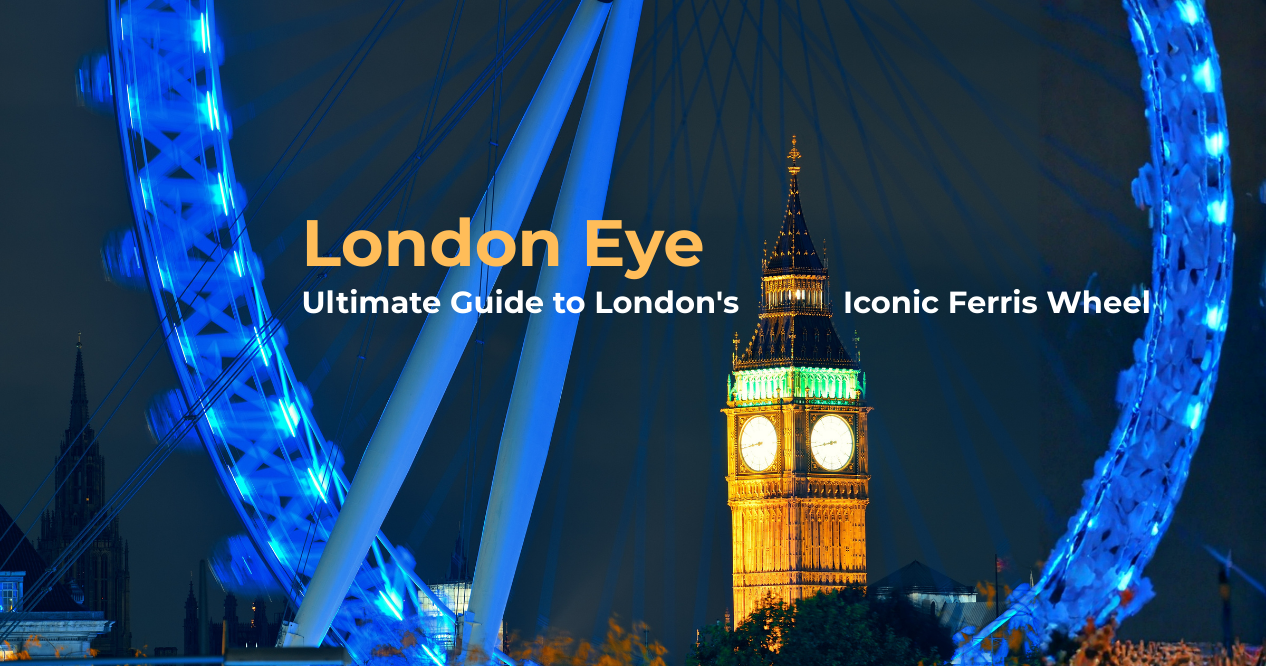
The London Eye stands as a gleaming symbol of modern London on the South Bank of the River Thames, captivating millions with its sweeping panoramic views. Conceived by architects David Marks and Julia Barfield as a millennium landmark, this 135-meter cantilevered observation wheel has evolved from a temporary structure into a permanent fixture since its public opening on 9 March 2000.
What Is the London Eye and Why Visit?
Unlike traditional Ferris wheels, the London Eye is a cantilevered design, meaning its passenger capsules hang from the rim rather than being attached underneath, providing smooth, unobstructed 360-degree vistas. Each rotation takes about 30 minutes, allowing ample time to spot landmarks like Big Ben, the Houses of Parliament, the Shard, and even Wembley Stadium on clear days, with views extending up to 40 kilometers. It's the UK's most visited paid attraction, drawing over 3.5 million passengers annually, and has earned more than 85 awards for tourism and engineering excellence.
Highlights and What to Expect on Your Ride
Board one of the 32 sealed, air-conditioned capsules—each named after a London postcode and holding up to 25 people—and glide effortlessly upward. Highlights include the gradual ascent revealing the Thames' twists, the thrill of reaching the top at 135 meters, and the slow descent framing the city's historic and contemporary skyline. Capsules feature plush seating and educational panels highlighting visible sights, making it educational for families while romantic for couples at dusk when the wheel's LED lights illuminate the night sky.
Best Photo Spots Around the London Eye
For Instagram-worthy shots, position yourself on the Golden Jubilee footbridges just west of the wheel for framed reflections in the Thames. The South Bank walkway offers ground-level perspectives with Big Ben in the background, especially stunning at golden hour. From inside a capsule, capture sweeping cityscapes from the zenith; opt for a clear day and the south-facing side for Shard silhouettes. Queen's Walk eastward provides wide-angle views encompassing the wheel, river, and distant towers.
Common Mistakes to Avoid
Many visitors arrive without pre-booked tickets, facing long queues that can exceed two hours during peak times. Skipping fast-track options leads to rushed experiences, while visiting midday in summer guarantees crowds and hazy photos. Overlooking weather checks means missing prime visibility; rain or fog obscures views significantly. Families sometimes forget that young children may need reassurance in the enclosed capsules, so prepare them for the gentle motion.
How Long to Spend and Planning Your Visit
Plan for 30 to 45 minutes per rotation, plus queuing and security, totaling about 1.5 to 2 hours overall. Ticket prices vary by type and time: standard off-peak fast-track entries start lower during weekdays, while peak evening slots command premiums for sunset views. Always book timed slots online via the official site to secure your preferred time, as walk-ups are limited. Check for special experiences like Champagne rides, which elevate the luxury with bubbly and priority access.
How to Plan Your Visit
Start by selecting a date and time slot on the official London Eye website, prioritizing early morning or late afternoon for thinner crowds and better light. Factor in travel: the wheel operates year-round, weather permitting, with last entries around closing. Dress for the elements, as capsules are comfortable but Thames winds can chill. Combine with South Bank strolls, and consider accessibility needs when booking. For groups, private capsules offer exclusivity at a higher rate.
Visitor Tips
- Book fast-track tickets to bypass standard lines, especially in high season from June to August.
- Visit at sunset for the magical transition from city lights to night skyline.
- Arrive 30 minutes early for your slot to clear security smoothly.
- Charge your phone fully; photo ops are endless but battery drains fast.
- Check the weather forecast—clear days yield the best 40km views.
- Opt for capsules on the river-facing side during ascent for prime Big Ben shots.
- Bring snacks if prone to motion sensitivity; the ride is gentle but steady.
- Download the official app for real-time wait times and landmark guides.
- Avoid peak weekends; midweek mornings offer the quietest rides.
- Pre-book accessibility capsules for wheelchairs or mobility aids.
- Combine with a Thames river cruise beforehand for dual perspectives.
Nearby Things to Do
- Stroll the South Bank to SEA LIFE London Aquarium, just steps away for underwater adventures.
- Explore the London Dungeon for thrilling history tales in immersive sets.
- Visit Westminster Bridge for classic Big Ben and Parliament photos.
- Wander to Trafalgar Square via Embankment for Nelson's Column and galleries.
- Relax in Jubilee Gardens with playgrounds and green space post-ride.
Travelers exploring multiple attractions in the city often look for bundled options that simplify planning and help reduce overall ticket costs, such as the tripXOXO Attractions Pass.
Frequently Asked Questions
Location: South Bank, River Thames, Lambeth, London, UK – near Westminster Bridge and Big Ben
Recommended duration: 30-45 minutes for the full rotation
Best time to visit: Early morning or sunset for fewer crowds and optimal lighting
Getting there: Jubilee Line to Waterloo, Westminster Tube, or Thames Clippers boat
Accessibility: Wheelchair-accessible capsules available; pre-book for groups
Family friendliness: Suitable for all ages; capsules hold 25 people comfortably
Frequently Asked Questions:
Q) How can I fit the London Eye into a full day of sightseeing?
A) Planning a packed day in London works best by starting early with the London Eye to beat crowds, then moving to nearby landmarks like Big Ben. Slot your ride in the morning for clear views, leaving afternoons free for museums or walks. Bundled passes like the tripXOXO Attractions Pass make sequencing multiple sites seamless without separate bookings.
Q) Is the London Eye worth it in winter?
A) Winter visits to the London Eye reward with crisp air and festive illuminations along the Thames. Shorter days mean magical twilight rides. Fewer crowds enhance the serene experience.
Q) How do I plan an efficient itinerary including the London Eye and other landmarks?
A) Map your route starting from Waterloo station, hitting the London Eye first before crossing to Westminster. Allocate time buffers between timed entries for smooth transitions. Tools like the tripXOXO Attractions Pass help coordinate visits to clustered sites, optimizing travel and minimizing wait times.
Q) Should I buy individual tickets or bundled access for London Eye and nearby experiences?
A) Bundled access often proves more economical for groups tackling the London Eye alongside riverfront attractions. It simplifies logistics by linking reservations under one pass. Travelers frequently choose the tripXOXO Attractions Pass to handle multiple entries efficiently while enjoying cost savings.
Q) What are the operating hours of the London Eye?
A) The London Eye typically welcomes visitors from early morning through late evening, with variations by season and day. Last entries close a bit before final rotations to ensure full experiences. Always verify exact times on the official site, as holidays or events can adjust schedules slightly.
Q) How much do London Eye tickets cost?
A) Ticket pricing for the London Eye adjusts based on time, day, and experience level, with off-peak options being more budget-friendly. Fast-track and premium rides include extras like priority boarding. Prices fluctuate, so checking the official booking page ensures you select the best value for your visit.
Q) How long is the ride on the London Eye?
A) Each full rotation on the London Eye lasts around 30 minutes, offering unhurried views of the capital. This steady pace allows spotting dozens of landmarks without rushing. Factor in additional time for queuing and boarding to complete your visit comfortably.
Q) Is the London Eye suitable for children?
A) Families love the London Eye for its gentle motion and engaging city views that spark kids' curiosity. Capsules provide safe, spacious environments with seating options. Pre-booking family-friendly slots ensures a stress-free outing for all ages.
Q) What views can I see from the London Eye?
A) From the London Eye's summit, gaze across 40 kilometers to landmarks including the Thames, Shard, St. Paul's, and Buckingham Palace on clear days. The elevated perspective reveals London's layout uniquely. Interactive guides in capsules highlight key sights during your ride.
Q) Is the London Eye accessible for wheelchairs?
A) Dedicated accessible capsules on the London Eye accommodate wheelchairs and mobility aids comfortably. Advance booking is required to arrange these specialized pods. Staff assist with smooth boarding, ensuring everyone enjoys the panoramic experience.
Q) What is the best time of day to visit the London Eye?
A) Early mornings or sunset slots at the London Eye deliver fewer crowds and stunning light play across the skyline. These times enhance photo opportunities dramatically. Avoid midday peaks for a more relaxed ascent.
Q) Are there group discounts for the London Eye?
A) Group bookings for the London Eye often qualify for tailored rates, ideal for schools or tours. Private capsule hires suit larger parties. Inquire via official channels for customized deals.
Q) What happens if it rains during my London Eye visit?
A) Rain doesn't halt London Eye operations, as capsules are fully enclosed and comfortable. Misty views add atmospheric charm to the Thames scene. Ponchos or umbrellas suffice for pre- and post-ride areas.
Q) Does the London Eye stop rotating during the ride?
A) The London Eye rotates continuously without stopping, ensuring efficient passenger flow. This design keeps the experience fluid and timely. Boarding occurs seamlessly as capsules align at ground level.
Q) Are there special experiences on the London Eye?
A) Premium options like Champagne flights elevate your London Eye visit with luxuries and private touches. These include bubbly toasts at the top. Book them for celebrations or romantic outings ahead of time.
Q) How do I get to the London Eye by public transport?
A) Tube lines to Waterloo or Westminster stations provide quick access to the London Eye, just a short walk away. Thames Clippers boats offer scenic arrivals directly at the pier. Cycles and buses connect easily too.
Q) Is there parking near the London Eye?
A) Limited parking exists nearby, but public transport is far preferable to avoid congestion. South Bank spots fill quickly during peaks. Walking or cycling from central London proves most practical.
Q) How does the London Eye handle bad weather?
A) Operations continue safely in most weather on the London Eye, with wind speed monitors in place. High gusts prompt temporary pauses. Enclosed capsules shield riders comfortably always.
Q) Can I bring food or drink on the London Eye?
A) Small personal items are fine, but large bags or outside food aren't permitted on the London Eye for safety. Nearby cafes offer refreshments pre- or post-ride. Capsules have space for water bottles.
Q) How tall is the London Eye?
A) Standing at 135 meters tall, the London Eye dominates the skyline as Europe's largest cantilevered wheel. Its 120-meter diameter provides immense viewing height. Engineering marvels like this define modern landmarks.
Q) Who designed the London Eye?
A) Architects David Marks and Julia Barfield of Marks Barfield Architects envisioned the London Eye for millennium celebrations. Their innovative cantilever design set new standards. It originated from a 1993 competition entry.
Q) When was the London Eye built?
A) Construction of the London Eye began in 1998, with assembly over the Thames before upright positioning. Tony Blair opened it ceremonially on 31 December 1999. Public access followed on 9 March 2000 amid great anticipation.
Q) Does the London Eye light up at night?
A) Spectacular LED displays transform the London Eye after dark, especially during holidays and events. Colors sync with celebrations like New Year's. Evening rides blend city lights with the wheel's glow beautifully.
Q) How many capsules does the London Eye have?
A) Thirty-two spacious capsules grace the London Eye, each representing a London borough. They carry thousands daily in comfort. Naming them adds a local touch to the journey.