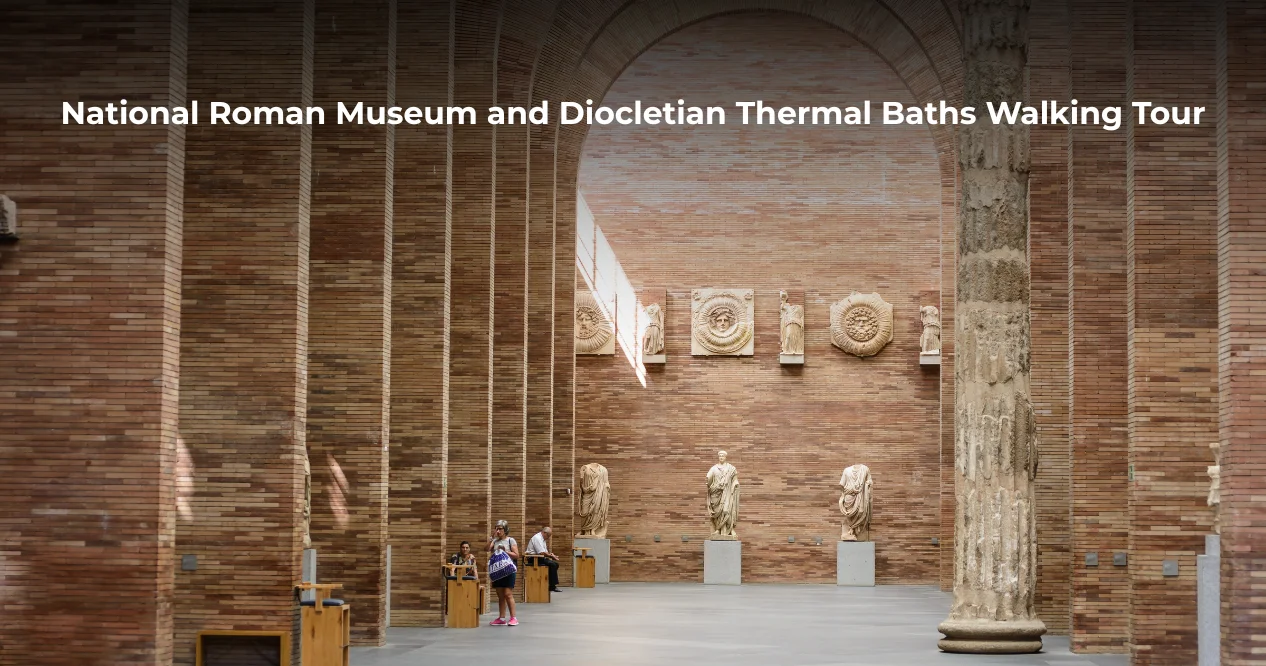
The National Roman Museum and Diocletian Thermal Baths Walking Tour offers an atmospheric way to encounter ancient Rome beyond the Forum and Colosseum. Centred on the Museo Nazionale Romano at the Terme di Diocleziano near Roma Termini, the experience brings together monumental imperial bath architecture, evocative gardens, archaeological fragments, inscriptions and museum displays that illuminate Roman public life.
The Baths of Diocletian were built at an immense scale during the late Roman Empire. Although later centuries transformed parts of the complex, its surviving spaces still convey the ambition of an ancient bathing establishment designed for large crowds. Today, the museum setting makes this an especially rewarding stop for travellers who want historical context rather than a hurried checklist of famous sights.
What Makes This Walking Tour Special
This visit is not simply about looking at ruins. A well-paced walking tour helps visitors understand how bathing complexes worked as social, cultural and practical institutions. The route can connect architectural remains with sculptures, tomb inscriptions and everyday objects, creating a clearer picture of Roman identity, religion, work and commemoration.
One of the defining visual moments is the relationship between ancient remains and the later Basilica of Santa Maria degli Angeli e dei Martiri, designed by Michelangelo within part of the bath complex. The surrounding area also places visitors close to Piazza della Repubblica, making the museum an easy addition to a Rome itinerary based around Termini.
Highlights to Look For
The Baths of Diocletian Complex
Look beyond individual artefacts and notice the scale of the surviving walls, halls and open spaces. These remains are the essential setting of the experience, revealing how a Roman thermal complex could serve bathing, exercise, study and social encounters on a vast urban scale.
Roman Sculpture and Inscriptions
The Museo Nazionale Romano preserves important ancient material across its sites. At the Baths, inscriptions and sculptural fragments provide especially direct links to real people and institutions. A guide can help distinguish honorary monuments, funerary texts and architectural decoration that might otherwise be easy to pass without context.
Ancient Rome Near Modern Termini
The location is itself part of the appeal. Within a short walk of Rome's main rail station, visitors move from the energy of contemporary transport routes into one of the largest bath complexes of ancient Rome. That contrast makes the tour particularly memorable for first-time visitors.
How to Plan Your Visit
Begin by confirming the date, meeting point, language and inclusions of the particular National Roman Museum and Diocletian Thermal Baths Walking Tour you choose. Guided products can differ in group size, route and whether museum admission is included. The museum may also alter access for exhibitions, restoration work, holidays or special events, so check the official website for the latest updates before finalising plans.
Prices should be considered in relation to what the booking includes. Some options may combine a guide with entry, while others may require admission to be arranged separately. Rather than relying on old online prices, review the current terms at the time of booking and bring confirmation details plus any eligibility documentation required for reduced or free admission categories.
Opening times and final-entry arrangements can change seasonally or for operational reasons. Morning departures are often a sensible choice because they leave the afternoon free for nearby central Rome, while weekday visits can feel more measured than peak weekend periods. Arrive early enough to locate the meeting point without rushing through Termini's busy approaches.
What to Expect on the Day
Expect a museum-focused archaeological walk rather than a strenuous outdoor excursion. The pace is usually suitable for travellers who are comfortable standing and walking through historic spaces, but footwear matters because surfaces can vary and a visit may include courtyards or uneven areas. Keep a light layer available, as interiors and open sections can feel different in temperature.
Allow roughly two to three hours for a guided visit with time to absorb the major spaces. Travellers who enjoy epigraphy, Roman religion or ancient architecture may wish to leave additional time before or after the tour. This is a place that rewards slow looking, especially when examining labels, stonework and the changing layers of the complex.
Best Photo Spots
The exterior and monumental remains of the Baths of Diocletian offer the strongest architectural compositions, particularly when early light defines brickwork and arches. The approaches around Piazza della Repubblica can help frame the scale of the former complex within modern Rome. Inside, photography rules may vary by gallery, exhibition and loan conditions, so follow posted instructions and ask staff when uncertain.
The Basilica of Santa Maria degli Angeli e dei Martiri provides another powerful nearby visual contrast between Roman engineering and later sacred architecture. Respect worshippers and any restricted zones if visiting the basilica. For museum photography, avoid flash where prohibited and never let image-making interrupt group movement or the experience of other visitors.
Transport and Arrival Advice
Roma Termini is the most convenient transport hub for the Baths of Diocletian. It connects the site with Metro lines A and B, national and regional trains, airport rail services and numerous bus routes. From the station, leave extra time to navigate the surrounding streets, particularly if arriving with luggage or during commuter periods.
Taxi travellers should confirm the precise entrance or meeting point in advance, since the museum complex and adjacent landmarks occupy a broad area. Rome's central traffic can be unpredictable. Walking from nearby accommodation is often pleasant, but summer heat and busy crossings make water, sun protection and a clear map useful.
Accessibility and Family Planning
The museum is a valuable choice for visitors seeking an indoor cultural experience near Termini, but historic architecture can create route-specific accessibility considerations. Contact the museum or tour provider in advance about step-free routes, lift access, seating, accessible toilets and the suitability of the planned itinerary for individual mobility needs. Check the official website for the latest updates.
Families will get more from the experience when children are invited to look for practical clues to Roman life, such as inscriptions, portraits and the immense scale of the former baths. A shorter, guide-led format can work well for school-age children. Bring water and a small snack for before or after the museum, while following museum rules on food and drink indoors.
Common Mistakes to Avoid
A frequent mistake is treating the Baths of Diocletian as a quick stop between trains. The site has a rich historical story and deserves enough time to understand its layout. Another is assuming every Museo Nazionale Romano venue is in the same building; the museum has multiple sites, so confirm the correct location and ticket terms.
Visitors should also avoid planning around unverified opening hours or outdated ticket prices. Rome's public museums can have special closures, exhibitions or access changes. Finally, do not overlook the value of arriving early: finding the meeting point calmly can make the entire tour more enjoyable.
Visitor Tips
- Confirm the exact meeting point before leaving your accommodation.
- Carry a government-issued ID if your booking or admission category requires it.
- Wear supportive shoes for historic floors and walking between nearby landmarks.
- Arrive at least fifteen minutes before a guided departure.
- Bring water, especially from late spring through early autumn.
- Keep your booking confirmation accessible on your phone.
- Check museum photography rules before taking pictures indoors.
- Allow extra time if navigating from Roma Termini with luggage.
- Ask in advance about accessibility needs and route adjustments.
- Review current closures, exhibitions and admission conditions on official channels.
Nearby Things to Do
- Visit the Basilica of Santa Maria degli Angeli e dei Martiri beside the former bath complex.
- Walk through Piazza della Repubblica and admire its grand semicircular urban setting.
- Explore Palazzo Massimo alle Terme, another Museo Nazionale Romano site near Termini.
- Pause at the Basilica di Santa Maria Maggiore, a short walk from the station area.
- Continue towards Via Nazionale for central Rome shopping, cafés and onward connections.
Travellers planning several cultural stops around Rome can make their day more coherent by grouping museums and historic landmarks by neighbourhood. The tripXOXO CITY Pass can be worth considering as part of a wider attraction plan, particularly when its current participating experiences and terms align with your itinerary.
Conclusion
The National Roman Museum and Diocletian Thermal Baths Walking Tour is a thoughtful alternative to Rome's busiest archaeological circuits. Its combination of imperial-scale architecture, museum collections and easy access from Termini makes it especially useful for travellers who want substance as well as atmosphere. Plan carefully, verify current arrangements and give the site enough time to reveal its many layers.
Location: Museo Nazionale Romano, Terme di Diocleziano, Viale Enrico de Nicola, near Roma Termini, Rome, Italy.
Recommended duration: Allow around two to three hours for a guided walking tour and unhurried time in the Baths of Diocletian complex.
Best time to visit: Morning visits and quieter weekday periods usually offer a more relaxed museum experience. Check the official website for the latest updates.
Getting there: The Baths of Diocletian are a short walk from Roma Termini, served by Metro lines A and B, regional trains, buses and airport connections.
Accessibility: The museum provides visitor accessibility information through official channels, but historic spaces may have route-specific limitations. Check the official website for the latest updates.
Family friendliness: The collection can suit curious families, especially those interested in Roman daily life, sculpture and ancient architecture, although younger visitors may benefit from a guide-led pace.
Frequently Asked Questions:
Q) How can I combine this tour with other Rome attractions?
A) The tripXOXO CITY Pass can help shape a broader Rome itinerary when its current inclusions suit your interests. Pair the Baths of Diocletian with nearby museum sites or central landmarks. Leave realistic travel time between reservations.
Q) How early should I arrive for the meeting point?
A) Arriving around fifteen minutes early provides a useful buffer. Roma Termini and nearby streets can be crowded and confusing for first-time visitors. Early arrival also allows time to address ticket questions.
Q) Can an attraction pass save money on a Rome museum itinerary?
A) Savings depend on the attractions chosen, visit dates and the pass terms in effect. The tripXOXO CITY Pass can be useful for travellers planning several included experiences. Compare current prices before committing to a pass.
Q) How should I plan several experiences together in Rome?
A) Start with fixed-time activities, then build flexible nearby visits around them. A tripXOXO CITY Pass may simplify planning when its listed experiences fit your preferred neighbourhoods. Avoid scheduling too many museums in one afternoon.
Q) Where does the National Roman Museum and Diocletian Thermal Baths tour take place?
A) The experience is based at the Baths of Diocletian section of the Museo Nazionale Romano in Rome. It sits near Roma Termini and Piazza della Repubblica. Confirm the exact entrance on your booking confirmation.
Q) How long should I allow for the walking tour?
A) Most visitors should reserve about two to three hours for a satisfying guided visit. This allows time for architectural explanation and museum displays. Add extra time if you enjoy reading labels or photographing exteriors.
Q) Are museum admission tickets included with every guided tour?
A) Inclusions vary between tour products and booking channels. Some guided options include admission, while others may not. Read the current product description and official museum conditions before purchase.
Q) What are the opening hours for the Baths of Diocletian?
A) Museum schedules can change for holidays, exhibitions, maintenance and operational needs. Official channels provide the most reliable current opening information. Check the official website for the latest updates before travelling.
Q) When is the best time to visit the museum?
A) Morning visits usually provide a calmer start and more flexibility afterwards. Weekdays can feel less pressured than peak weekend periods. Seasonal demand still affects crowd levels, so plan ahead.
Q) How do I reach the Baths of Diocletian from Roma Termini?
A) The museum complex is within easy walking distance of Roma Termini. Follow your confirmed meeting instructions rather than relying only on a map pin. Allow extra time during busy commuter hours.
Q) Can I use the Rome Metro to reach the tour?
A) Roma Termini is served by Metro lines A and B. From there, the Baths of Diocletian are reached on foot. Check current transport notices if travelling during strikes or service changes.
Q) Are there nearby cafés after the tour?
A) The Termini and Piazza della Repubblica areas have many cafés and casual dining options. Choose a place after the tour rather than risking a late return to the meeting point. Keep time flexible during busy lunch periods.
Q) Is the route suitable for visitors with limited mobility?
A) Historic museum areas can have different access conditions depending on the route used. Contact the museum or provider before booking to discuss individual requirements. Check the official website for the latest updates.
Q) Can I take photographs inside the museum?
A) Photography permissions can differ by room, exhibition and object loan conditions. Posted notices and staff instructions should always guide your choices. Flash or tripods may be restricted in sensitive areas.
Q) What should I wear for the Diocletian Baths tour?
A) Comfortable walking shoes are the most useful choice for this cultural visit. Light layers work well because temperatures can vary between galleries and outdoor spaces. Modest clothing is appropriate when visiting nearby religious buildings.
Q) What should I bring on the day of the tour?
A) Bring your booking confirmation, identification if required, water and a charged phone. A small bag is usually easier to manage in museum spaces. Check current bag policies before arriving.
Q) Are there toilets at the museum?
A) Visitor facilities are generally available at major museum sites, though access can depend on the active route. It is wise to use facilities before a timed departure. Ask staff politely if you need assistance.
Q) What is the best way to avoid crowds at the Baths of Diocletian?
A) Choose an early weekday visit where possible and book a defined tour time. Arrive before the meeting time rather than joining a rush. Avoid relying on peak-season walk-up availability.
Q) What happens if it rains during the tour?
A) Much of the experience concerns museum and historic interior spaces. Rain may affect arrival, exterior commentary or walking between points. Carry a compact rain layer and follow provider instructions about meeting arrangements.
Q) Are food and drinks allowed inside the museum?
A) Museum rules commonly protect collections by limiting food and drink in gallery spaces. Finish snacks before entering and keep water use discreet where permitted. Follow staff guidance and posted restrictions throughout the visit.
Q) Will I see the Basilica of Santa Maria degli Angeli?
A) The basilica stands closely beside the former bath complex and is an important contextual landmark. Whether it is entered depends on the selected itinerary and church access. Respect services and worshippers if visiting independently.
Q) What makes the Baths of Diocletian historically important?
A) They were among the largest bath complexes built in ancient Rome. Their scale reflects the social importance of public bathing and leisure. Surviving structures also reveal centuries of reuse and transformation.
Q) Can I visit other Museo Nazionale Romano sites on the same day?
A) The museum network includes several important Rome locations with separate practical considerations. Check the current ticket validity and opening schedules before combining sites. Do not assume every venue shares identical access rules.
Q) Are guided tours available in different languages?
A) Language availability depends on the provider, date and demand. Confirm the advertised language before completing a reservation. If language is essential, avoid assuming bilingual guidance will be offered.