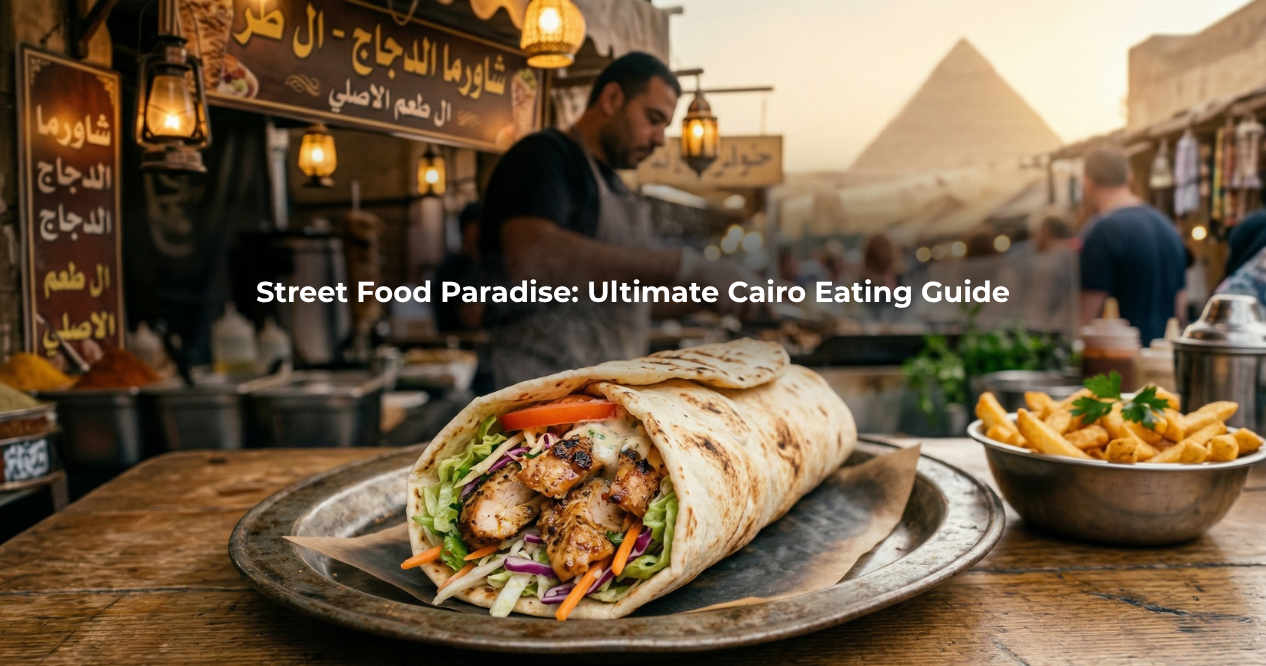
Cairo isn't just Egypt's capital—it's a full-contact sport for your taste buds. From midnight kebab joints packed with theatrical energy to humble street stalls serving century-old recipes, this sprawling megacity is a food lover's fever dream. If you're ready to eat like a true Egyptian, forget the tourist menus and dive headfirst into the chaotic, delicious world of Cairo's street food scene. Your stomach (and soul) will thank you.
The Sacred Trinity: Koshary, Falafel & Fuul
These three dishes form the backbone of Cairo street food culture, and honestly, you could spend a week eating just these and never get bored.
Koshary is Egypt's national dish, a beautifully chaotic mashup of rice, lentils, macaroni, chickpeas, and fried onions topped with spicy tomato sauce and a tangy garlic-vinegar dressing called "da'ah." It's vegan, ridiculously filling, and costs pocket change. Head to Koshary Abou Tarek for the absolute legend status experience—no Egyptian street food is more famous than this place.
Falafel (taamiya) here flips the script on what you think you know. While most of the world makes falafel from chickpeas, Egyptians do it right with blanched fava beans crushed with fennel, onions, garlic, cilantro, and spices. The result? Crispy, fragrant perfection that sets the global standard. Try Naser Alfaiomy, the self-proclaimed "King of Falafel," where locals have been gathering for generations.
Fuul medames (stewed fava beans) is the undisputed breakfast champion. Mushed, spiced, and served in a sandwich or by the bagful, it's an ancient recipe that's been perfecting itself for centuries. Bashandy in Heliopolis does breakfasts that will ruin you for life—their fuul-and-falafel combos are genuinely dreamworthy.
Travel Tip: Get to these spots early. By 10 AM, the best street food vendors are often sold out for the day.
The Meat Masters: Where Cairo Grills Like Champions
Cairo's meat culture runs deep, and the grill marks prove it. This is where technique becomes art.
Kebabs and kofta are serious business. Minced lamb mixed with spices, pressed onto metal skewers, and kissed by hot coals creates something that tastes like an Egyptian-style sausage but infinitely more complex. Kebab Muhammed El Rafey serves some of the best kebabs, kofta, and tarb (spiced meat) in all of Cairo. Go hungry.
Shawarma gets the Egyptian treatment at Abou Haidar, where they break the mold by adding tomatoes, baba ganoush, and fresh mint leaves into the meat—a genius move you won't find anywhere else on Earth. One bite and you'll understand why it's the most famous shawarma spot in the city.
Stuffed pigeon is the showstopper at Farahat Grill, a restaurant you absolutely cannot miss. This isn't street food in the traditional sense, but it's the kind of place locals take you to celebrate.
For something truly special, find Nefael Nagahy in the bustling market. Their lamb is baked underground, then re-boiled in its own juices—the result is meat so tender it melts on your tongue. Pair it with Egyptian sausage and you've found street food nirvana.
Travel Tip: Cairo eats late. Don't miss the action at places like Beggah Restaurant, which stays packed well after midnight with locals treating their meals like theatrical performances. The energy alone is worth the trip.
Breakfast Like an Egyptian: The Morning Glory Hour
Forget your hotel's continental spread. Real Cairo breakfast happens on the street, and it's a flavor explosion.
Beyond fuul and falafel sandwiches, you'll find rotating roasted chickens that spin hypnotically in flame-roasting cabinets, bathing in their own juices. Grab a half chicken with bread and you've got lunch for three bucks.
Egyptian sandwiches are architecture projects—layers of fried liver, breaded and golden at Al Nasr, or crispy falafel with pickles, tomatoes, and tahini sauce wrapped in soft flatbread. The combinations are endless and weirdly perfect.
The bread itself matters. Baladi (diet bread), Arabic bread, and thick loaves cost just a few Egyptian pounds and are your vehicle for everything else. Buy extra—you'll want it.
Travel Tip: Visit Bashandy early and try their breakfast sandwich combinations. Locals swear by the fuul with french fries and falafel combo—it sounds chaotic, tastes transcendent.
The Adventurous Eater's Guide: Try Something Weird
Cairo rewards the brave.
Liver and brain sandwiches at Ali El Sharqawy are an Egyptian way—breaded, fried, and served on flatbread. First-timers often hesitate; second-timers come back for more.
Fermented fish (featured at Shahin El Fassakhany) is definitely an acquired taste, but it's a window into ancient Egyptian food traditions. The pungent, salty flavor is utterly unique.
Mombar mahshy looks intimidating—Egyptian sausages stuffed with spiced rice—but they're a divine street treat. Sweet, savory, and complex.
Sougok (Egyptian beef sausage) is served fajita-style with cooked onions, peppers, and tomatoes. It's hearty, flavorful, and criminally underrated.
Travel Tip: Don't overthink it. Ask locals what they're eating and order the same thing. Trust the crowd—they know.
Sweet Finales: Desserts That Stick With You
After your savory adventure, cool down with mihallabiya, an Egyptian milk pudding that's rich, creamy, and costs almost nothing. It's the perfect palate cleanser and comes in flavors like rose and pistachio.
These street desserts aren't fancy, but they're satisfying and authentic—the true end to a Cairo street food journey.
Your Cairo Street Food Survival Kit
- Cash is king: Most street vendors don't take cards. Withdraw Egyptian pounds and keep small bills handy.
- Timing is everything: Breakfast (6–10 AM), lunch (12–2 PM), dinner (7–10 PM), and late night (after 11 PM) are prime eating windows.
- Water is your friend: Carry bottled water. Street food is delicious but can be heavy.
- Go with a local: If possible, ask your hotel or a local guide to take you. They know the hidden spots and can vouch for cleanliness.
- Embrace the chaos: Crowded, loud, smoky street stalls? That's where the best food lives. Join the fray.
Ready to eat your way through Cairo? Stop overthinking and start exploring. Pack your appetite, bring cash, and prepare to have your entire relationship with food transformed. Cairo's street food scene isn't just about eating—it's about experiencing the soul of Egypt one bite at a time.
Frequently Asked Questions
1. What is koshary and why is it so famous in Cairo?
Koshary is Egypt's national dish combining rice, lentils, macaroni, chickpeas, and fried onions topped with spicy tomato sauce and tangy garlic-vinegar dressing. It's famous because it's inexpensive, filling, vegan-friendly, and represents centuries of Egyptian culinary tradition—perfectly embodying street food culture.
2. Why do Egyptians make falafel from fava beans instead of chickpeas?
Egyptian falafel (taamiya) uses blanched fava beans rather than chickpeas, creating a unique texture and flavor profile. Locals believe this ancient method—refined over generations—is what makes Egyptian falafel the global standard that other cuisines aspire to match.
3. Where can I find the best koshary in Cairo?
Koshary Abou Tarek is the legendary destination for authentic koshary. It's considered the absolute authority on this national dish and is the most famous koshary spot in the city.
4. What's the best time to eat street food in Cairo?
Breakfast (6–10 AM), lunch (12–2 PM), and dinner (7–10 PM) are prime eating windows. Cairo also has a vibrant late-night street food scene that gets packed well after midnight, offering a unique theatrical atmosphere.
5. Is Egyptian street food safe to eat?
Yes, Egyptian street food is generally safe, especially at busy, popular stalls where high turnover means fresh ingredients. Stick to vendors with crowds, go with locals when possible, and drink bottled water to minimize any digestive issues.
6. What makes Abou Haidar's shawarma different from other places?
Abou Haidar adds tomatoes, baba ganoush, and fresh mint leaves directly into the meat—a unique preparation method not found anywhere else. This special technique makes it the most famous shawarma spot in Cairo.
7. What adventurous dishes should I try as a first-timer?
Start with liver and brain sandwiches at Ali El Sharqawy (breaded and fried), then explore mombar mahshy (spiced rice-stuffed sausage), sougok (beef sausage with vegetables), and fermented fish for authentic, traditional experiences that push culinary boundaries.
8. Do I need to speak Arabic to order street food in Cairo?
No. The best strategy is to point at what other people are eating and order the same thing, or ask your hotel concierge or a local guide to accompany you. Watching and mimicking locals works perfectly and often leads to authentic recommendations.