Morocco can change scenery before you have finished your mint tea. One morning you are slipping through a centuries-old medina; a day later, you could be crossing the Atlas Mountains, watching the Sahara turn copper at sunset or eating grilled fish beside the Atlantic.
This is a country built for curious travellers. Go beyond the headline sights and Morocco rewards you with neighbourhood bakeries, mountain villages, palm-filled oases, artisan workshops and wonderfully slow afternoons over tea.
Marrakech: Markets, Gardens And Medina Magic
Marrakech makes an exhilarating first stop. Begin early in the medina, when its alleys are quieter, and wander through the souks around Jemaa el-Fna. Look for handwoven textiles, leatherwork, metal lanterns and spice stalls rather than rushing from one landmark to another.
Make time for architectural highlights such as Bahia Palace and Ben Youssef Madrasa, then escape the busiest streets in one of the city's gardens or traditional riads. In the evening, Jemaa el-Fna becomes a whirl of food stalls and performers.
Travel Tip: Explore the medina on foot and download an offline map before setting out. GPS can be imprecise in narrow covered lanes, and a locally licensed guide is worthwhile if you want deeper context about architecture, crafts and neighbourhood life.
Try A Traditional Hammam
A hammam is one of Morocco's most memorable local rituals. Neighbourhood bathhouses offer the most traditional experience, while riads and spas provide more private, newcomer-friendly versions. Expect steam, black soap and vigorous exfoliation.
Fes And Chefchaouen: Crafts And Blue-Lane Wandering
Fes feels like a journey deeper into Morocco's history. Its old medina, Fes el-Bali, is a dense network of lanes packed with workshops, fountains, food sellers and historic religious buildings. Watch artisans hammer brass, carve wood and work leather using techniques passed through generations.
The famous tanneries are best seen from surrounding terraces. The smell can be strong, but watching hides move through the colourful dyeing process offers a fascinating glimpse into one of the city's long-established crafts.
Travel Tip: Some religious sites in Morocco are closed to non-Muslim visitors, so check access locally and enjoy their architecture respectfully from permitted areas. In Fes, a qualified guide can also help you find small workshops that are easy to miss.
Further north, Chefchaouen tumbles across the Rif Mountains in shades of blue. Its photogenic lanes draw plenty of visitors, but quieter corners appear quickly when you wander away from the central squares. Walk uphill toward the Spanish Mosque area around sunset for broad views over the town and surrounding hills.
Atlas Mountains And Sahara Desert Adventures
The High Atlas provides the dramatic counterpoint to Morocco's imperial cities. Imlil is a popular base for walks among Amazigh villages and for expeditions toward Mount Toubkal. Even without tackling a summit, guided village walks reveal terraced fields, walnut trees and mountain hospitality.
Travel Tip: Mountain weather changes quickly, particularly at altitude. Bring layers and suitable footwear, and check current trail conditions and local requirements before attempting higher routes such as Mount Toubkal.
For desert landscapes, travellers commonly head toward Merzouga and the Erg Chebbi dunes or farther south to the Erg Chigaga region. Camel rides may get the postcards, but walking across the dunes, listening to local music at camp and watching the stars emerge can be equally memorable.
Consider spending two nights rather than racing through on a single overnight excursion. The distances from Marrakech and Fes are substantial, and an extra night creates time to appreciate oasis settlements and the desert beyond sunset photos.
Travel Tip: Ask desert operators about camp location, group size, transport and animal-welfare practices before booking. Summer temperatures can be extreme, while winter desert nights can become surprisingly cold.
Essaouira And The Atlantic Coast
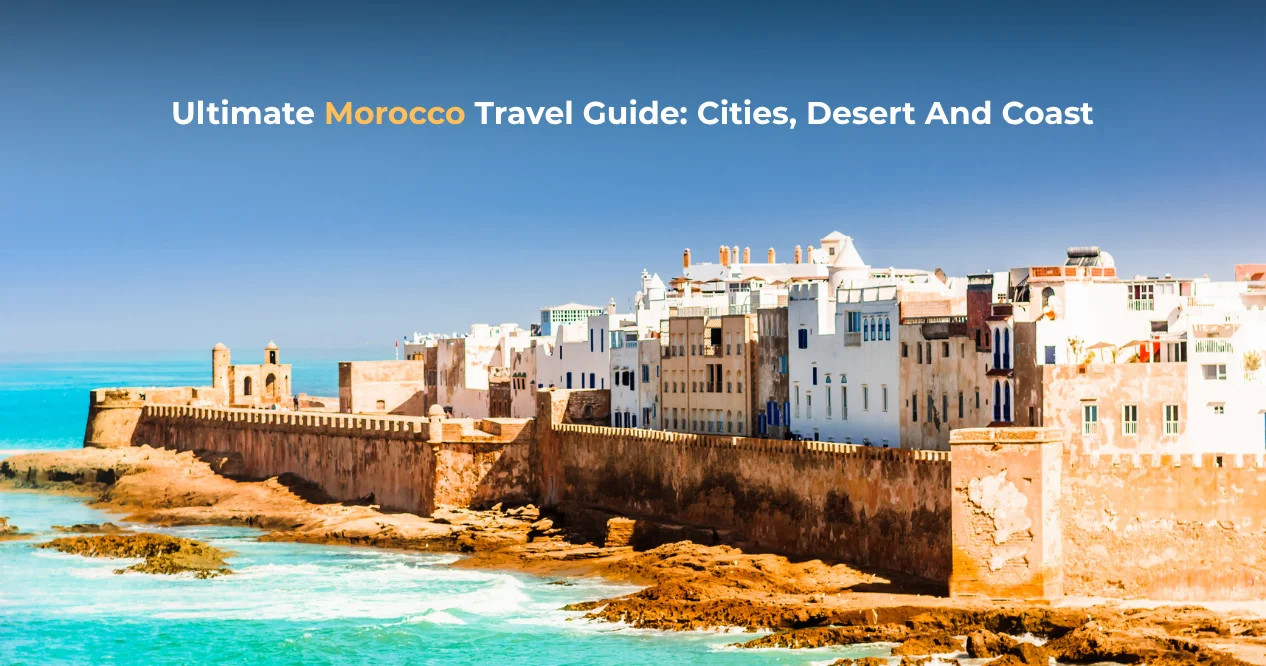
When Morocco's cities begin to feel intense, Essaouira offers a breezier rhythm. Walk its fortified ramparts, explore the compact medina and watch blue fishing boats return to the harbour. Strong Atlantic winds have also made the surrounding coast popular for surfing, windsurfing and kitesurfing.
Seafood is part of the pleasure here. Check prices before ordering at harbour stalls or settle into a small restaurant for grilled sardines, calamari and the day's catch. Leave time simply to roam: Essaouira works best when your schedule is deliberately loose.
Travel Tip: Pack a light jacket even when inland Morocco is warm. Essaouira can be considerably cooler and windier than Marrakech, particularly in the evening.
Eating, Exploring And Travelling Morocco Well
Food is one of the easiest ways to experience everyday Morocco. Seek out tagines, couscous, harira, msemen flatbread and pastilla, and sample regional dishes rather than expecting the same menu everywhere. A food tour or cooking class can also introduce ingredients and markets that are difficult to decode alone.
Trains conveniently connect major northern and central cities including Tangier, Rabat, Casablanca, Meknes, Fes and Marrakech. Buses and shared or private taxis fill many of the gaps, while reaching remote mountain and desert areas generally requires road transport.
Travel Tip: Carry some Moroccan dirhams for small shops, markets, taxis and rural stops even if you use cards at larger hotels and restaurants. For souk purchases, polite bargaining is normal; agree on taxi fares or confirm the meter before setting off where appropriate.
Spring and autumn generally provide comfortable conditions for exploring much of Morocco, although climates vary sharply between coast, mountains, cities and desert. Ramadan dates shift each year and can affect daytime opening hours, transport patterns and restaurant availability, so check your specific travel dates before departure.
Build your Morocco journey around contrast rather than trying to tick off every city. Pair a medina with the mountains, slow down for the desert and finish with Atlantic air. Check current entry requirements, weather and local transport before departure, then start planning the Moroccan route that matches your pace. [add booking link]
Frequently Asked Questions
1. What Are The Best Places To Visit On A First Morocco Trip?
Marrakech, Fes, the High Atlas, the Sahara and Essaouira create a varied itinerary combining historic cities, mountains, desert landscapes and the Atlantic coast.
2. When Is A Good Time To Visit Morocco?
Spring and autumn are generally comfortable across many regions. Conditions vary considerably, however, so check forecasts for the coast, Atlas Mountains and desert separately.
3. Is One Night In The Sahara Enough?
It is possible, but two nights provide a less rushed experience and more time to enjoy the dunes, oasis communities and desert atmosphere.
4. Do I Need A Guide In The Moroccan Medinas?
A guide is not essential, but a qualified local guide can be particularly useful in Fes or Marrakech for navigation, historical context and finding artisan workshops.
5. What Should I Do In Chefchaouen?
Explore the blue-painted lanes, wander beyond the busiest central areas and head uphill toward the Spanish Mosque area for views around sunset.
6. How Can I Travel Between Moroccan Cities?
Trains link many major cities, while buses and taxis cover additional routes. Mountain villages and desert destinations typically require further road transport.
7. What Moroccan Foods Should I Try?
Look for regional tagines, couscous, harira, msemen and pastilla. Cooking classes and food tours are useful ways to discover local ingredients and market culture.
8. What Should I Pack For Morocco?
Pack comfortable walking shoes, adaptable layers and clothing suited to your itinerary. Add warmer layers for winter desert nights and mountain trips, plus a light jacket for windy Essaouira.